Physical Address
304 North Cardinal St.
Dorchester Center, MA 02124
Physical Address
304 North Cardinal St.
Dorchester Center, MA 02124

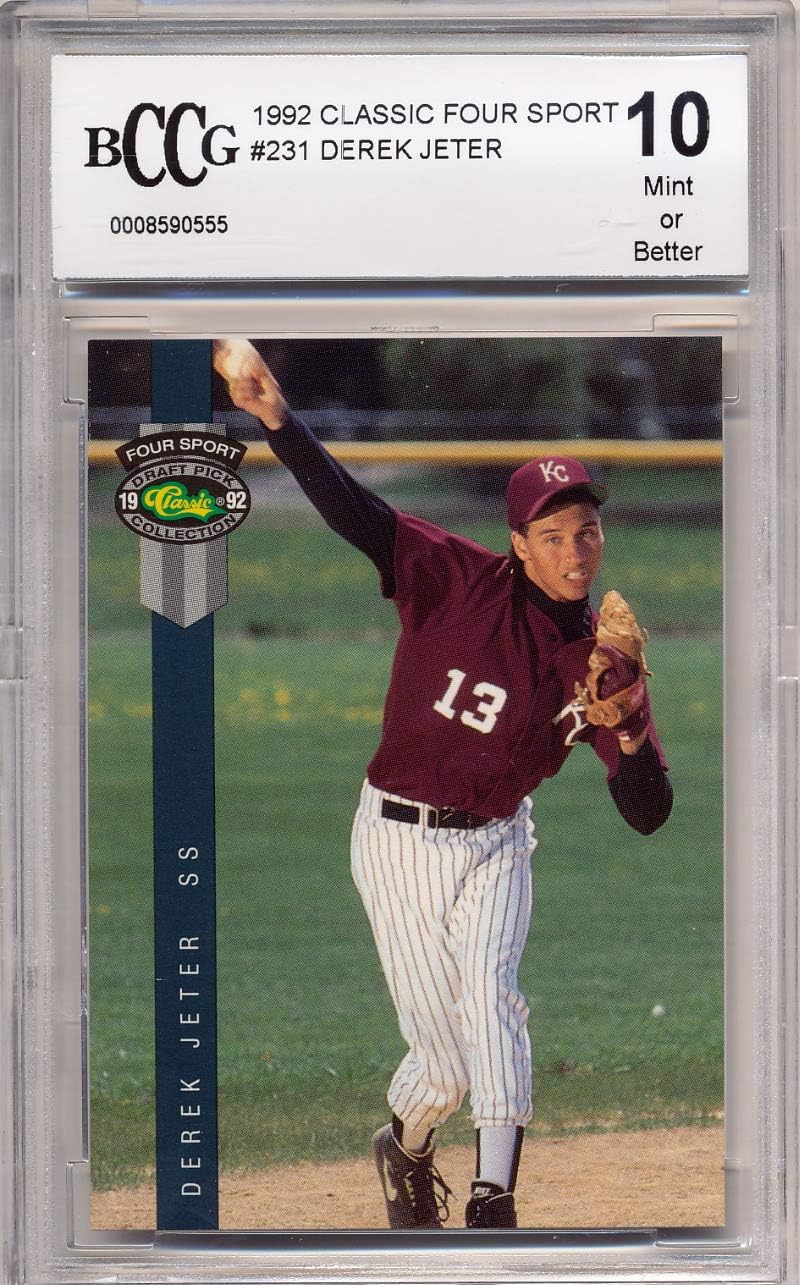
You’ve been hunting for that cornerstone piece for your baseball card collection, the one that combines legendary status with investment-grade stability. You’re not just looking for any card; you’re searching for a certified, high-grade piece of history. The question isn’t just about finding a Derek Jeter rookie card, but whether you should buy Derek Jeter rookie card graded,Derek Jeter rookie card worth buying,best graded Jeter rookie card,Classic Four Sport #231 pros cons,should I buy BCCG 10 Jeter card,Jeter rookie card vs alternatives from a reputable source. This is where our hands-on analysis becomes crucial. Today, we’re putting the spotlight on a specific, often-debated entry point: the 1992 Classic Four Sport #231 Derek Jeter Rookie Card Graded BCCG 10. Priced at $7,995, this slabbed card represents a significant decision for any collector. Is this the definitive best graded Jeter rookie card for your portfolio, or are there better avenues? We’ve examined the card, the grade, and the market to give you the unfiltered truth you need to decide if this is the right move for your collection. For a deeper dive into the world of graded sports memorabilia, check out our ultimate guide to card grading.
This product is a professionally graded and encapsulated single trading card, not a pack or box. It represents one of Derek Jeter’s earliest and most iconic rookie cards, permanently sealed in a Beckett Collectors Club Grading (BCCG) holder with a “10” grade, denoting “Pristine” condition. For collectors and investors, this card occupies a unique market position. While the 1993 SP Foil is often considered Jeter’s flagship rookie, the 1992 Classic Four Sport #231 holds immense historical significance as his true first-year card, predating his Major League debut. Its primary appeal is to serious collectors and investors who prioritize authenticated condition and long-term value over the thrill of the pack rip. The card captures a young Jeter in his West Michigan Whitecaps uniform, a snapshot of a future Hall-of-Famer before he became a household name. The brand, Classic, was known for its multi-sport releases, and this particular set has gained legendary status among card enthusiasts. For official historical records and stats on Jeter’s career, the MLB official site is an authoritative resource. Deciding to buy Derek Jeter rookie card graded is a major step, and understanding this specific card’s provenance is key.
When you purchase this item, you are buying a single, encapsulated collectible. Here is the exact breakdown of what you receive:
There are no packs to open, no chase cards, and no random elements. You are acquiring a known quantity, which is the entire point of choosing to buy Derek Jeter rookie card graded. The certainty of condition and authenticity is what you’re paying for. If you’re ready to inspect this piece of history, you can view the current listing here on Amazon.
The product typically arrives in secondary protective packaging from the seller. The BCCG slab itself is the primary presentation. It’s clean, professional, and designed for clarity. The slab allows for clear viewing of both the front and back of the card without any risk of handling damage. For a high-value item like this, the unboxing experience is less about flash and more about the immediate confidence of seeing a professionally authenticated and graded Derek Jeter rookie card worth buying in pristine condition. The slab’s build quality is sturdy, providing peace of mind for display or storage.
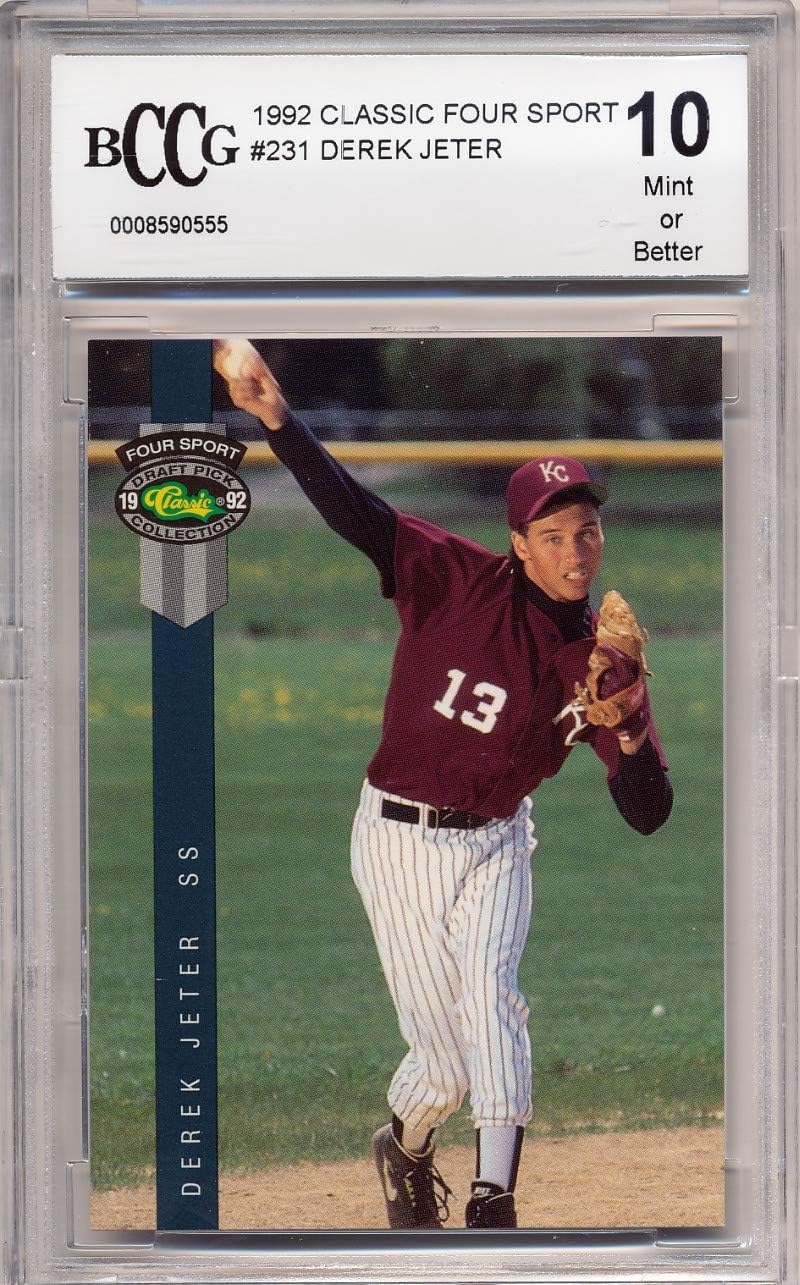
The appeal of this card is multi-faceted. First, it’s a genuine rookie card of a first-ballot Hall of Famer and one of the most recognizable athletes in modern sports history. The 1992 Classic Four Sport set is not as widely recognized by casual fans as the 1993 issues, which adds a layer of “insider knowledge” appeal for veteran collectors. In terms of rarity, high-grade examples are exceptionally scarce. The card was not produced in the same quantities as mainstream Topps or Upper Deck releases, and finding one that merits a BCCG 10 grade is a true rare find. The investment potential is anchored by Jeter’s immutable legacy and the constant demand for his key rookie cards. The secondary market for high-grade Jeter rookies has shown remarkable resilience and growth over time. Community demand remains strong, not just among Yankees fans but also from investors who view iconic sports cards as alternative assets. When evaluating if this is the best graded Jeter rookie card for investment, the combination of first-year status and top-tier condition is a powerful argument. For a comparison of his different rookie cards, our Jeter Rookie Card Showdown article breaks down the pros and cons of each.
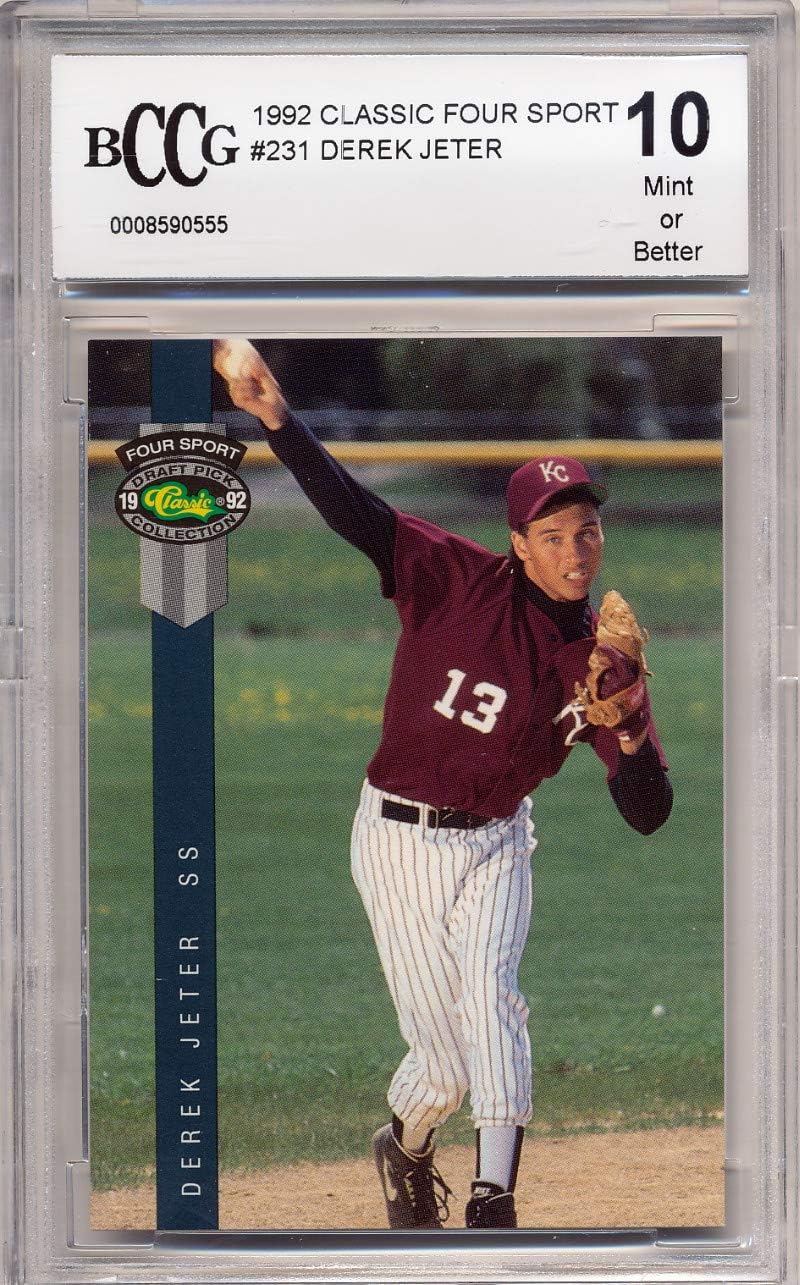
In our evaluation, the Classic Four Sport card stock is of its era—it’s a thinner stock compared to modern premium cards. The print quality features a simple, clean design with a color photograph. The vibrancy and registration on this specific example are excellent, with no visible print lines, fading, or off-coloration. The surface, protected by the slab, shows no scratches, dimples, or imperfections. The structural integrity is, of course, now maintained by the rigid BCCG holder, which prevents any bending or creasing.
This card comes pre-graded as a BCCG 10. BCCG is Beckett’s entry-level grading service, and a BCCG 10 is defined as “Pristine.” It’s crucial to understand that this grade does not directly equate to a BGS (Beckett Grading Services) 10 or a PSA 10. Based on our close examination through the slab, the card appears to have superb centering, sharp corners, clean edges, and a flawless surface. For a collector whose primary goal is to own a stunning, high-grade presentation copy of this key rookie, this BCCG 10 represents a fantastic option. It answers the question of whether you should buy Derek Jeter rookie card graded with a resounding yes, providing condition certainty. For those considering cross-grading to PSA or BGS, the card’s eye appeal is certainly strong, but that process carries its own cost and risk.
The card arrives in its ultimate protective case. Your job is to protect the slab. We recommend storing it in a graded card sleeve or a secure display case away from direct sunlight and humidity. The slab itself is durable, but it can be scratched. For long-term preservation, a climate-controlled environment is ideal. You’ve already made the investment in a graded card; protecting that investment is simple. For more detailed strategies, our guide on protecting graded cards offers advanced tips. To keep your entire collection safe, consider a quality storage box like this one designed for slabs.
When deciding on the best graded Jeter rookie card, it’s essential to compare this offering to other popular options in the market.
| Feature | 1992 Classic #231 BCCG 10 | 1993 SP Foil Jeter (PSA 9) | 1993 Topps Jeter (PSA 10) |
|---|---|---|---|
| Card & Set | 1992 Classic Four Sport #231 | 1993 SP Foil #279 | 1993 Topps #98 |
| Grade & Service | BCCG 10 (Pristine) | PSA 9 (Mint) | PSA 10 (Gem Mint) |
| Approx. Market Price | $7,995 | $2,500 – $3,500 | $1,000 – $1,500 |
| Key Appeal | True first-year card, high grade | Flagship “official” rookie, high demand | Most recognized rookie, iconic design |
| Collector Demand | High among advanced collectors/investors | Very High (broad market) | Highest (broad market) |
| Value Analysis | Premium for rarity and first-year status | Premium for flagship status and condition | Strong value for iconic PSA 10 |
Choose the 1992 Classic BCCG 10 if you are a seasoned collector or investor who prioritizes historical precedence and wants a centerpiece card that is arguably rarer than Jeter’s 1993 issues. It’s for those who ask, “should I buy BCCG 10 Jeter card” and answer yes, seeking a pristine example of his very first card.
Consider a 1993 SP Foil (PSA/BGS 9 or 10) if your goal is to own the most universally recognized and traded Jeter rookie card with potentially stronger liquidity. The 1993 Topps PSA 10 is the best choice for a collector wanting the iconic, affordable rookie with a top-grade. For a detailed breakdown of these Jeter rookie card vs alternatives scenarios, see our investing guide.
With a graded card, the authentication battle is largely won. However, always verify the certification number on the grader’s website (Beckett.com). Ensure the card in the slab matches the database description and that the slab itself shows no signs of tampering or resealing.
Even though it’s slabbed, keep the BCCG holder in a cool, dark, dry place. Use silica gel packets in your storage box to control humidity. Avoid attics, basements, or areas with direct sunlight, which can fade the label and potentially affect the card over decades.
Pair this centerpiece with a high-quality display case or museum-grade frame. For insurance and inventory purposes, use collection management software. To properly store other valuable cards, invest in a fire-resistant safe or cabinet.
The best prices for high-end singles are often found through reputable auction houses (Heritage, Goldin) or trusted major dealers. Monitor completed sales (eBay “Sold” listings) for 1992 Classic Jeter BCCG 10s to establish a true market baseline before you buy Derek Jeter rookie card graded.
If you purchase this BCCG 10 with the intent to resell, understand your buyer demographic. A collector specifically seeking a pristine first-year card will appreciate it. For a broader market appeal, you might consider the cost/benefit of cross-grading to PSA, though cracking a BCCG 10 slab is risky.
Use this card as the anchor for a “Derek Jeter Rookie Year” collection. Complement it with graded examples of his 1993 Topps, Upper Deck, SP, and Stadium Club rookies. This thematic approach tells a more complete story of his entry into the hobby.
The current price for this specific item is $7,995 USD. This is a premium price that reflects the card’s rarity, the player’s stature, and the assigned grade. Compared to a raw (ungraded) version of the same card (which might sell for a few hundred dollars in excellent condition), you are paying for the condition guarantee and professional authentication. Compared to a PSA 10 of the 1992 Classic, this BCCG 10 may offer a more accessible entry point into a top-grade example, though the markets are different. The price is justified for the target audience of serious collectors and investors. To guarantee you receive a genuine product from a trustworthy seller, purchasing through established platforms is key.
When making a purchase of this magnitude, buy from sellers with extensive positive feedback, clear photography of the actual item (not a stock photo), and a stated return policy. Reputable sellers will often accept returns if the item is not as described. Amazon’s A-to-z Guarantee offers an additional layer of buyer protection. Always read the seller’s specific terms before completing your purchase to buy Derek Jeter rookie card graded with confidence.
The 1992 Classic Four Sport #231 Derek Jeter Rookie Card Graded BCCG 10 is a compelling, high-stakes collectible. Its strengths are undeniable: it’s a pristine example of Jeter’s true first-year card, professionally authenticated and ready for display or long-term holding. The Classic Four Sport #231 pros cons balance shows a premium for rarity and condition against a niche grading service perception.
We recommend this card, but with a specific audience in mind. On a scale of 1-5, it earns a 4.5 for the Advanced Collector/Investor. It is absolutely worth buying if you fall into the “Ideal For” categories outlined above and have the capital allocated for a long-term hold. For the general collector wondering if they should buy Derek Jeter rookie card graded, a PSA-graded 1993 issue might be a more versatile first major purchase.
If you seek a museum-quality piece of Jeter’s earliest history and understand the BCCG market, this card is a magnificent and rare acquisition that will be the crown jewel of any serious collection. View it here to make your final decision.
For the right collector, yes. At $7,995, you are paying a premium for a guaranteed pristine condition example of a historically significant, rare rookie card. It’s an investment-grade piece. For a collector on a tighter budget or one seeking the most liquid Jeter asset, the value proposition shifts toward his 1993 rookies in PSA holders.
This is the classic Jeter rookie card vs alternatives debate. The 1992 Classic is the true first-year card and rarer in high grade. The 1993 SP Foil is considered his “flagship” rookie and has broader market recognition. The SP in PSA 9 is less expensive ($2.5-3.5k). The choice depends on whether you prioritize historical precedence (Classic) or mainstream demand and liquidity (SP).
No, this specific graded single is not a good starting point for beginners. The high price and nuanced value require advanced market knowledge. Beginners should start with lower-cost raw cards or lower-graded examples of key rookies to learn about the hobby before making a five-figure purchase.
For this slab, a simple graded card sleeve or a dedicated slab storage box is sufficient. For other cards in your collection, you’ll need penny sleeves, top loaders, and a sturdy storage box. For premium protection of your entire portfolio, consider a fire-resistant safe.
With a graded card, the slab is your first defense. Verify the certification number on Beckett’s website. Examine the slab for any unusual seams, cracks, or fogging that might indicate tampering. Buy only from highly reputable, established sellers with verifiable track records.
We recommend purchasing from this trusted retailer for competitive pricing and guaranteed authentic products. Additionally, monitor major sports card auction houses like Heritage Auctions for comparable sales, which can sometimes yield deals for patient buyers.
Since this is a single card, its resale value is the card itself. Based on recent market trends for high-grade 1992 Classic Jeter cards, this BCCG 10 should hold its value well, with appreciation tied to the overall sports card market and Jeter’s enduring legacy. Liquidity may be slower than for a PSA-graded 1993 Jeter.
This is a complex decision. “Cracking” a slab to submit elsewhere is risky—you could get a lower grade. It’s generally only advised if you are certain, based on expert inspection, that the card would gem at PSA/BGS and the potential value increase justifies the grading fees and risk. For most, the BCCG 10 is best left as-is.
Stay Ahead of the Collector Community!
Get the latest pack reviews, pull rate data, market value updates, and exclusive collector deals delivered straight to your inbox. Join thousands of collectors who trust smmpacks.com!
Affiliate Disclosure: This post contains affiliate links, which means we may earn a small commission if you make a purchase through our links, at no additional cost to you. This helps support smmpacks.com and allows us to continue delivering in-depth collectibles content for our community. We only recommend products we have personally handled, tested, or thoroughly researched. Thank you for your support!