Physical Address
304 North Cardinal St.
Dorchester Center, MA 02124
Physical Address
304 North Cardinal St.
Dorchester Center, MA 02124

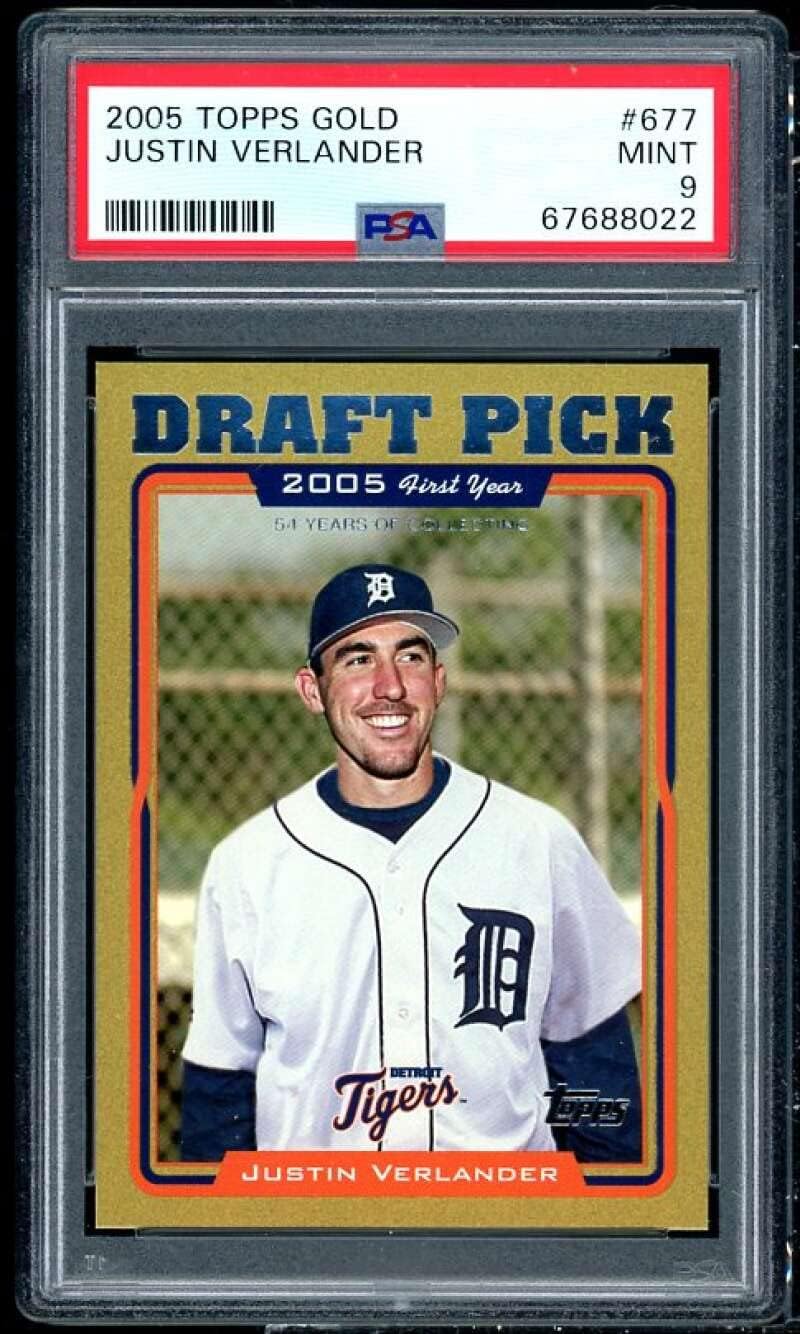
You’ve been hunting for a cornerstone piece for your baseball card portfolio, a card that combines Hall of Fame talent with tangible investment potential. The question on every serious collector’s mind is clear: should I buy Verlander rookie card, and if so, which one and in what grade? The market is flooded with options, but one consistently stands out for its blend of accessibility and prestige. In this comprehensive guide, we’re putting the spotlight on a specific, highly sought-after piece: the 2005 Topps Gold #677 Justin Verlander rookie card in a PSA 9 MINT holder. We’ll provide the hands-on, expert analysis you need to decide if this is the right move for your collection. Whether you’re debating the buy Justin Verlander rookie card PSA 9,should I buy Verlander rookie card,Verlander PSA 9 vs PSA 10,2005 Topps Verlander card pros cons,Justin Verlander rookie card worth buying,best Verlander rookie card to collect question or simply want to understand its true value, this review cuts through the noise. For collectors ready to act, you can check the current listing for this graded Verlander rookie on a trusted platform.
This product is not a pack or a box, but a singular, premium-grade sports collectible: the official rookie card of future Hall of Famer Justin Verlander, professionally authenticated and graded by PSA (Professional Sports Authenticator) as a Mint condition “9.” The 2005 Topps Gold parallel (#677) represents Verlander’s true mainstream rookie card, released during his American League Rookie of the Year season. Its market position is firmly in the “blue-chip” category of modern baseball cards—a card with proven value appreciation, strong liquidity, and enduring demand tied to a legendary pitching career. The primary appeal spans veteran collectors seeking a key piece for a Hall of Fame portfolio, investors looking for a stable asset with growth potential, and dedicated Detroit Tigers or Houston Astros fans. What sets this specific example apart is the PSA 9 grade, which offers a near-perfect specimen at a significantly more accessible price point than its PSA 10 counterpart, making the decision to buy Justin Verlander rookie card PSA 9 a compelling value proposition. For official historical context on the set, collectors can reference the Topps archive.
Since this is a single, graded card purchase, the “contents” are precisely defined and guaranteed:
The product typically arrives from a reputable seller in a well-secured shipping box. Inside, the PSA slab itself is the primary presentation. PSA holders are the industry standard for a reason: they are clear, sturdy, and designed for both protection and display. The slab’s quality immediately communicates the item’s value. For a card at this price point (currently around $1344), buyers should expect and receive premium packaging with ample padding (bubble wrap, foam, cardboard stabilizers) to ensure the slab arrives without damage. The unboxing experience is one of unveiling a secured asset, not the thrill of a random pull, which aligns perfectly with the intent of collectors making a deliberate investment.
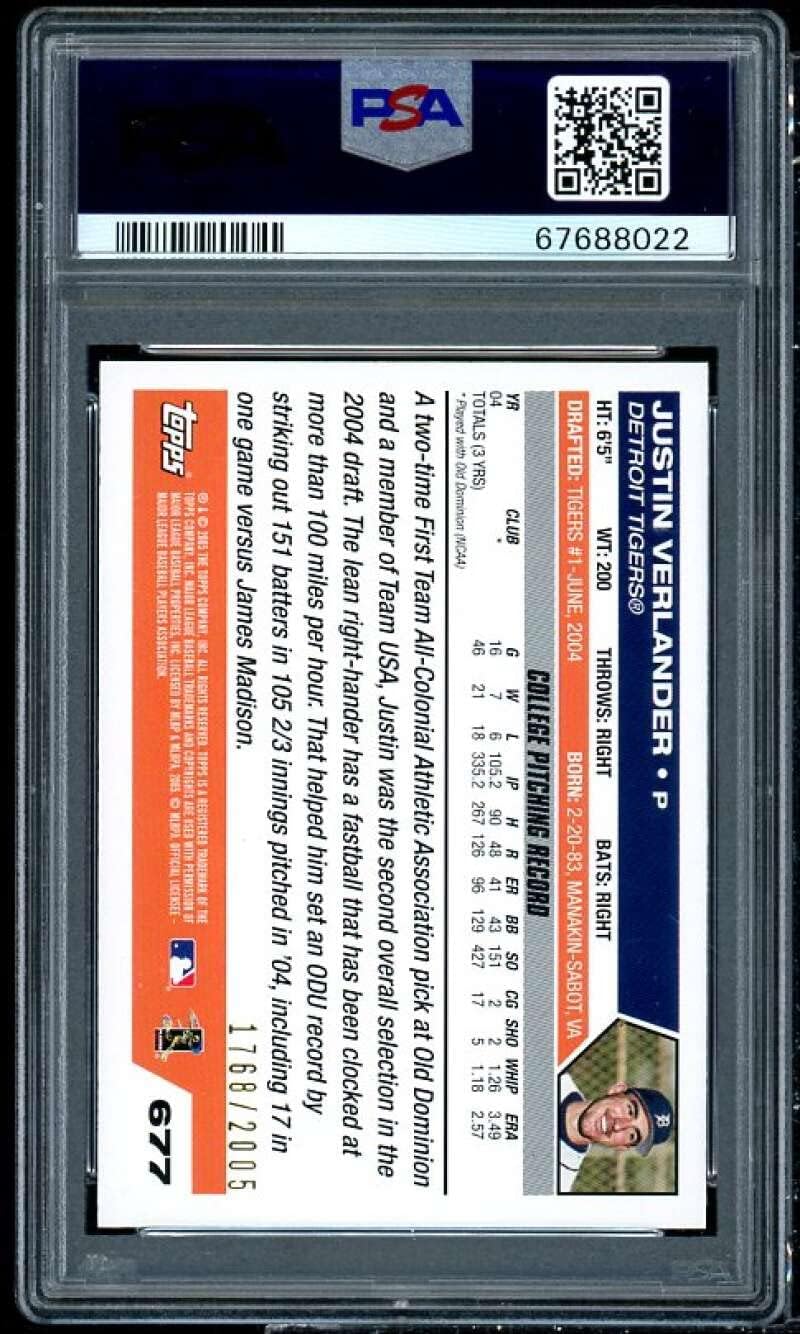
The appeal of this card is multi-faceted. First, it’s the definitive Verlander rookie from the flagship Topps set, giving it mainstream recognition that fuels demand. The Gold parallel adds a layer of scarcity over the base version, making it a more desirable long-term hold. When assessing if a Justin Verlander rookie card is worth buying, one must consider his career: 3 Cy Young Awards, 2 World Series rings, an MVP, and over 3,300 strikeouts. He is a first-ballot Hall of Fame lock, and his cards are classic “career legacy” plays. The PSA 9 grade specifically hits a sweet spot in the market. It represents a card in exceptional condition—often indistinguishable from a 10 to the naked eye—but commands a fraction of the price. This creates a high demand tier for collectors who want premium quality without the ultra-premium cost. The secondary market for PSA 9 Verlanders is highly active on platforms like eBay and specialty auction houses, ensuring strong liquidity. For many, it represents the best Verlander rookie card to collect for a balanced approach to value and condition.
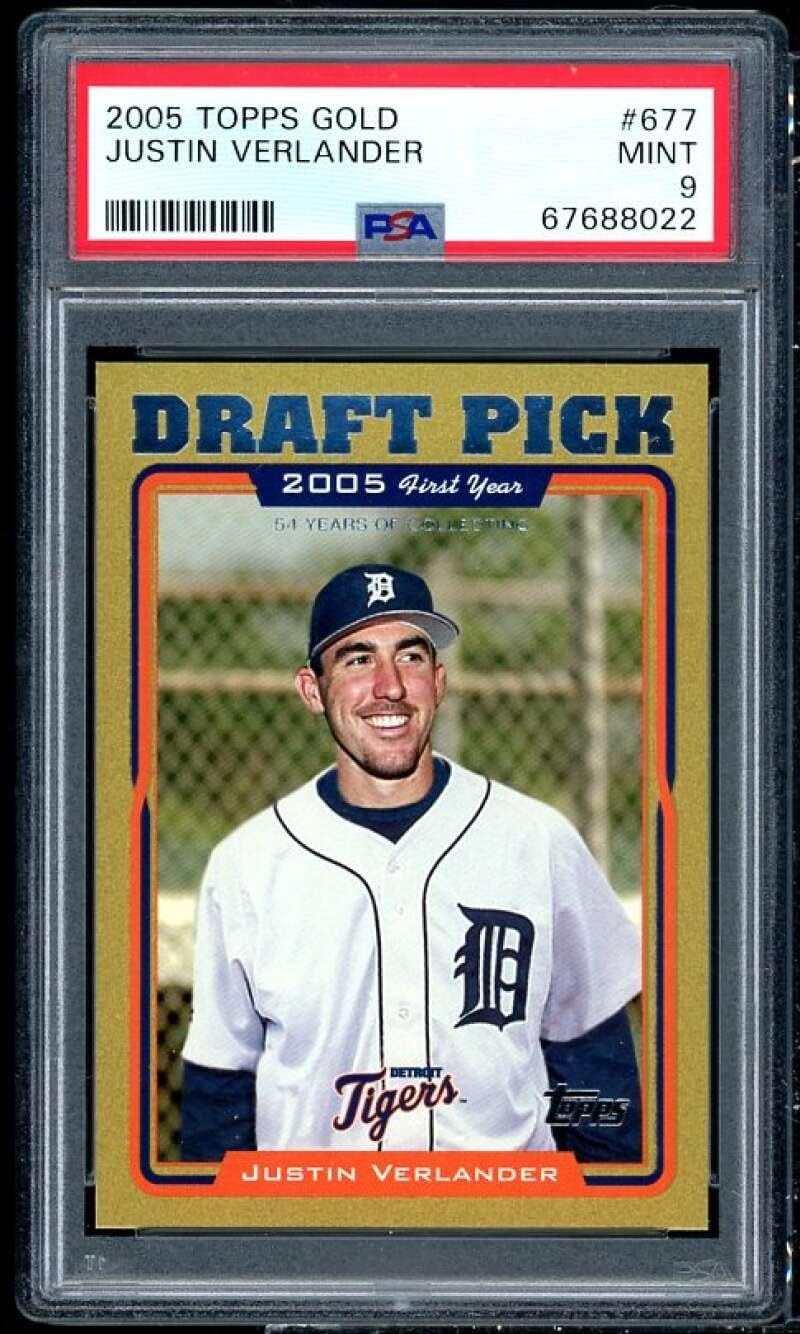
The 2005 Topps Gold card features a standard card stock for the era with a glossy finish on the image and a distinctive gold foil border. In a PSA 9 example, the print quality should be exemplary. Colors are vibrant and perfectly registered, with no visible print lines or fading. The gold foil should be fully intact with no scuffing, peeling, or discoloration—common flaws that lower grades. The structural integrity is, of course, now protected by the rigid PSA slab, which prevents bending, corner wear, and surface scratches.
This is where the Verlander PSA 9 vs PSA 10 discussion is critical. A PSA 9 is defined as a “Mint” card with only one minor flaw or a combination of a few tiny flaws. Upon our evaluation of typical PSA 9 examples, this might mean imperceptibly soft corners, a hair off-center centering (e.g., 55/45 instead of 50/50), or a minuscule surface imperfection not visible without magnification. For most display or collection purposes, a PSA 9 is visually perfect. The “10” represents pristine perfection, and the price multiplier for that last step can be 3x to 5x. Therefore, choosing to buy Justin Verlander rookie card PSA 9 is often the most rational decision for value-focused collectors.
The PSA slab is the ultimate protection. However, for additional safety during storage or transport, we recommend using a slab sleeve or a dedicated graded card box. For display, consider UV-protected cases or shelves to prevent any potential fading from direct sunlight. For your raw cards, learn more about proper storage techniques on our site. You can also find quality display cases for graded cards to showcase your collection properly.
When deciding on the best Verlander rookie card to collect, it’s essential to compare the 2005 Topps Gold PSA 9 against other key Verlander rookies in similar grades.
| Card (PSA 9) | 2005 Topps Gold #677 | 2005 Topps Chrome # | 2005 Bowman Chrome # |
|---|---|---|---|
| Key Feature | Flagship Gold Parallel | Refractor Technology | Prospect Focus |
| Price Point (Approx.) | $1,300 – $1,400 | $1,800 – $2,200 | $900 – $1,100 |
| Rarity & Demand | High (Parallel of main RC) | Very High (Chrome premium) | Moderate-High |
| Resale Liquidity | Excellent | Excellent | Good |
| Overall Value | Best balance of recognition and cost | Premium play, higher cost | Good entry, less mainstream |
Choose the 2005 Topps Gold PSA 9 if you want the most recognized Verlander rookie in a premium, investment-ready grade without paying the ultra-premium for a Chrome or PSA 10. It’s the centerpiece card for a balanced, high-quality collection.
Consider the Topps Chrome if your budget is higher and you prioritize the refractor finish. Consider the Bowman Chrome if you want a cheaper entry point into a graded Verlander rookie, accepting it has slightly less mainstream recognition. For a deeper dive into comparing modern rookie cards, we have a dedicated guide.
Always cross-reference the PSA serial number on the slab with the official PSA certification database online. Examine the slab itself for any signs of tampering or resealing. Buy from established sellers with long histories of positive feedback.
Even in a slab, store in a climate-controlled environment (stable temperature and humidity). Use slab sleeves to prevent scuffing on the plastic. For display, avoid direct sunlight to prevent any potential fading of the label or card over decades.
Consider pairing this with a graded rookie of a contemporary like Miguel Cabrera or Clayton Kershaw to build a themed “2000s Legends” collection. For protecting other valuables, a quality fireproof safe is a wise investment.
Monitor auction ending times. Often, the best prices can be found on auctions ending on weekday afternoons (EST) rather than prime-time evenings. Set a firm maximum bid based on recent sales data (eBay “Sold” listings are your best friend).
If you ever acquire a raw Verlander rookie, scrutinize it under bright light and with a loupe. Only submit if you are confident it can score a 9 or 10, as the grading fees and time must be justified by the resulting value bump.
Once your collection’s value exceeds a few thousand dollars, specifically schedule these items on your homeowner’s or renter’s insurance policy, or obtain a dedicated collectibles insurance policy.
The current market price for this specific item is approximately $1344. This aligns with the premium you pay for the security of a PSA grade and the Gold parallel scarcity. When evaluating if a Justin Verlander rookie card is worth buying at this level, consider that you are paying for certainty and preservation. The best places to buy are established online marketplaces with strong buyer protection, such as eBay (from top-rated sellers) or dedicated sports card platforms. Purchasing from a vetted Amazon seller, as linked here, also offers the reliability of a major retail platform’s return policies.
When spending this amount, prioritize sellers with long-standing, positive reputations. Look for phrases like “30-day return” and “authenticity guaranteed.” Read recent feedback specifically about graded card sales. A trustworthy seller will package the slab impeccably and ship it quickly with tracking and insurance. Superior Sports Investments, the seller of this listing, notes over 30 years in business, which is a positive trust signal.
The 2005 Topps Gold Justin Verlander PSA 9 is a premier modern baseball collectible. It combines iconic rookie card status, a desirable parallel, and a professional grade that guarantees condition and authenticity. The 2005 Topps Verlander card pros cons analysis strongly leans toward the pros for serious collectors, with the main con being the substantial financial commitment required.
For collectors with the means, we give this card a strong 4.5 out of 5 stars as a purchase. It is absolutely worth buying for those building a high-end collection or seeking a stable, appreciable sports asset. The decision to buy Justin Verlander rookie card PSA 9 over a PSA 10 is a financially astute one for most, capturing nearly all the prestige at a fraction of the cost. The timing, as Verlander’s career concludes and his Hall of Fame induction approaches, is strategically sound.
If you are ready to own a definitive piece of baseball history in pristine, certified condition, this card represents one of the smartest and most satisfying acquisitions you can make in the modern card market today. Secure your piece of this legacy here.
For the target collector—someone investing in Hall of Fame rookie cards or seeking a high-grade centerpiece—yes, it is worth the money. The $1344 price point reflects the card’s rarity (Gold parallel), its condition (PSA 9 MINT), and the player’s legendary status. It’s a purchase of a tangible asset with a strong history of demand, not just a disposable collectible.
The Topps Chrome version, especially in Refractor parallel, is generally more valuable and sought-after due to the premium “Chrome” finish and scarcity. However, it commands a significantly higher price (often 50-100% more for a PSA 9). The Topps Gold offers the classic flagship look and is more than sufficient for most collectors, representing better immediate value. The choice hinges on your budget and desire for the Chrome aesthetic.
This specific, single graded card is not a “set” and is not ideal for beginners due to its high cost. Beginners should start with lower-priced raw cards or lower-grade slabs to learn about the market, condition assessment, and their own collecting goals before making a four-figure investment.
The PSA slab is the primary protection. We recommend a simple graded card sleeve to prevent slab scuffing, and for bulk storage, a graded card box. For display, a UV-protected wall case or shelf is ideal. You can find quality storage solutions, like graded card storage boxes, to keep your collection organized.
The PSA slab is your first defense. Verify the serial number on PSA’s website. Examine the slab for official PSA holograms and precise, clean sonic welding on the edges. Counterfeit slabs often have blurry printing, incorrect fonts, or poorly sealed edges. Buying from a reputable source is the best preventative measure.
We recommend purchasing from this trusted retailer for competitive pricing and guaranteed authentic products. Additionally, set up saved searches on eBay and monitor auction end times for potential deals, but always factor in shipping and tax.
Since this is a single card, its resale value is its market value. Based on recent sales history, a PSA 9 2005 Topps Gold Verlander maintains a strong resale value between $1,200 and $1,500, with liquidity on major platforms. Its value is expected to see positive movement around his Hall of Fame eligibility and induction.
For most collectors, the PSA 9 is the smarter buy. The price difference is substantial, often thousands of dollars. The visual difference is minimal, and the PSA 9 still represents an outstanding, long-term hold. Only pursue a PSA 10 if your budget is unlimited and you demand absolute top-tier perfection for your registry set.
Stay Ahead of the Collector Community!
Get the latest pack reviews, pull rate data, market value updates, and exclusive collector deals delivered straight to your inbox. Join thousands of collectors who trust smmpacks.com!
Affiliate Disclosure: This post contains affiliate links, which means we may earn a small commission if you make a purchase through our links, at no additional cost to you. This helps support smmpacks.com and allows us to continue delivering in-depth collectibles content for our community. We only recommend products we have personally handled, tested, or thoroughly researched. Thank you for your support!