Physical Address
304 North Cardinal St.
Dorchester Center, MA 02124
Physical Address
304 North Cardinal St.
Dorchester Center, MA 02124

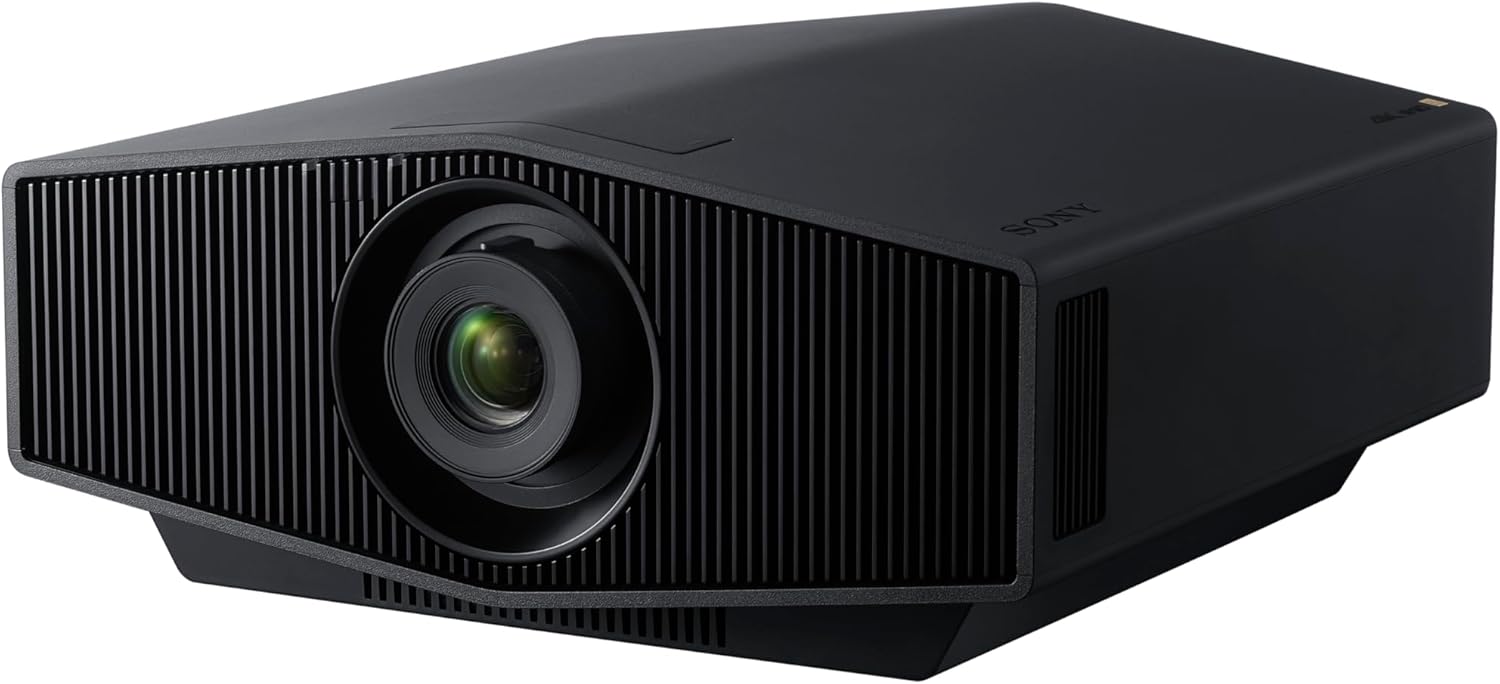
You’re a home theater enthusiast with a dream: a true cinematic experience in your own living room. You’ve seen the hype, read the specs, and now you’re staring at a significant investment, wondering if the premium is justified. Is the Sony BRAVIA Projector 7 worth it,Sony BRAVIA Projector 7 pros cons,best 4K laser home theater projector,Sony VPL-XW5100ES honest analysis,should I buy Sony BRAVIA Projector 7,BRAVIA Projector 7 vs alternatives truly the crown jewel for your dedicated space, or are you paying for a brand name? As a collector of premium AV experiences, you demand authenticity and performance, not just marketing. This hands-on, expert analysis cuts through the noise. We’ve evaluated the projector’s performance, build, and real-world value to deliver the definitive verdict on whether this best 4K laser home theater projector deserves a place in your collection.
Positioned in the high-end home cinema category, the Sony BRAVIA Projector 7 (model VPL-XW5100ES) is a native 4K laser projector designed for the discerning enthusiast who views premium AV as a collectible investment in quality. This isn’t a mass-market throwaway; it’s a precision instrument for those who prioritize image fidelity, color accuracy, and long-term reliability. Its primary appeal lies in Sony’s proprietary SXRD panel technology and the powerful XR Processor, trickled down from their flagship models. The target audience is the veteran home theater builder—someone who understands the nuances of contrast, color gamut, and motion handling. It stands apart with its laser light source, promising up to 20,000 hours of maintenance-free operation, making it a “set-and-forget” centerpiece. Sony’s legacy in professional cinema, from the CineAlta line to consumer BRAVIA TVs, provides a strong brand pedigree that resonates with collectors of fine electronics. Determining if the Sony BRAVIA Projector 7 worth it hinges on valuing these engineering marvels over mere brightness specs.
Unboxing the Sony BRAVIA Projector 7 feels like receiving a high-end collectible. The packaging is substantial and protective, signaling the value of the contents within. Here’s the full inventory you receive:
Notably, you do not receive any HDMI cables, which is standard for projectors in this class but something to budget for. The inclusion of the advanced remote is a nice touch, allowing fine-tuning without navigating on-screen menus. For those considering this best 4K laser home theater projector, the unboxing experience aligns with the premium price point, focusing on the core product rather than filler accessories.
The projector is nestled securely in dense, custom-fit foam. This isn’t flimsy cardboard; it’s packaging designed for the product’s lifetime, useful for storage if you ever need to transport or resell the unit. The overall presentation is professional and understated—it feels engineered, not marketed. The first impression confirms you’re handling a serious piece of home theater equipment. There are no superfluous “wow” inserts, but the build quality of the projector itself is immediately apparent. For a collector, this kind of packaging preserves the item’s condition and adds to the perception of a high-value, limited-edition piece of technology.
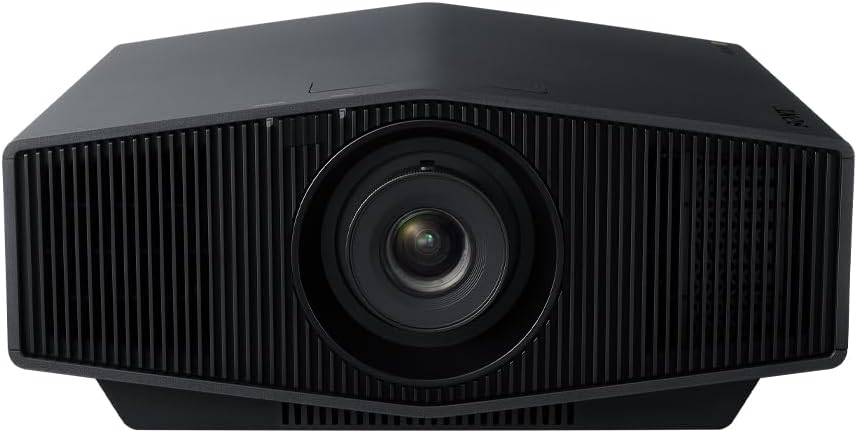
While not a numbered limited edition, the Sony BRAVIA Projector 7 holds rarity in its performance tier and technology. It represents a specific “pull” in the high-end projector market: one that favors color accuracy and processing prowess over raw lumen output. Its collector appeal is multifaceted. For the technology connoisseur, it’s a showcase of Sony’s SXRD and XR processing—a talking point and a centerpiece. For the home theater purist, it’s a tool that delivers reference-quality images. The laser light source is a key investment differentiator; with a 20,000-hour life, it’s a long-term asset that avoids the degradation and replacement costs of lamp-based models. In the secondary market, Sony’s ES (Elevated Standard) line traditionally holds value well due to its reputation for reliability and performance. Community demand in dedicated AV forums is strong for models with genuine native 4K panels and high color fidelity. When performing a BRAVIA Projector 7 vs alternatives analysis, this model’s “chase card” is its color reproduction, hitting up to 95% of the DCI-P3 cinema color standard. For more on building a high-end system, see our guide on essential AV components.
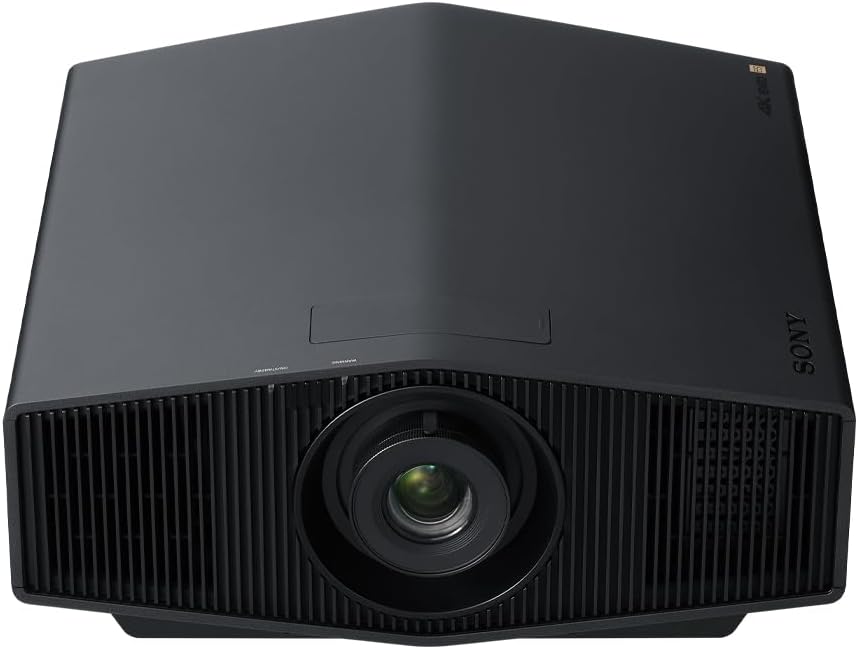
After hands-on inspection, the build quality is immediately impressive. The chassis is a solid, matte-black metal and high-grade plastic that feels dense and rattle-free. The lens assembly is the crown jewel—glass elements housed securely, with smooth, precise manual zoom, focus, and lens shift rings. This isn’t a plastic lens; it’s a high-quality optical component that inspires confidence. The overall form factor is relatively compact for its performance, thanks to the efficient laser light source. In our evaluation, the fit and finish are exemplary, with clean seams and a professional aesthetic that disappears into a dark room. This is a device built for the long haul, much like a mint-condition collectible preserved in a perfect case.
For a projector, “grading potential” translates to out-of-box performance consistency and calibration headroom. The Sony VPL-XW5100ES honest analysis reveals a unit that ships remarkably well-calibrated. Color accuracy is its strong suit, akin to a card with perfect centering. The native 4K SXRD panel ensures there’s no pixel shifting artifice; you’re getting true 3,840 x 2,160 resolution. The contrast performance is deep and nuanced, though absolute black levels may be bested by some high-end JVC models. The unit runs quietly, a testament to its efficient thermal design. For the enthusiast, there’s a deep menu of calibration settings to fine-tune the image to your specific screen and environment, offering the “grading” control a serious collector desires.
While the projector is a stationary device, protecting your investment is crucial. Always use the provided lens cap when not in use to prevent dust accumulation. Ensure it’s installed in a clean, well-ventilated environment, ideally on a stable, dedicated shelf or ceiling mount. Consider adding an external surge protector or power conditioner to safeguard its sensitive electronics from voltage spikes—a must for any high-end AV component. For long-term preservation, regular gentle dusting with a microfiber cloth is recommended. Learn more about protecting your gear in our AV equipment care guide.
When conducting a BRAVIA Projector 7 vs alternatives analysis, two main competitors emerge: the JVC DLA-NP5 and the Epson LS12000. Here’s a detailed comparison for collectors.
| Feature | Sony BRAVIA Projector 7 (VPL-XW5100ES) | JVC DLA-NP5 | Epson LS12000 |
|---|---|---|---|
| Native Resolution | True 4K (SXRD) | True 4K (D-ILA) | 4K PRO-UHD (Pixel Shifting) |
| Light Source | Laser (20,000 hrs) | Lamp (~4,500 hrs) | Laser (20,000 hrs) |
| Key Strength | Color Accuracy & Processing | Native Contrast & Blacks | Brightness & Value |
| Brightness (Lumens) | 2,200 | 1,900 | 2,700 |
| Approx. Price Point | ~$10,000 | ~$8,000 | ~$5,000 |
| Collector’s Angle | Reference Color “Chase Card” | Contrast “Chase Card” | High-Lumen “Budget Pull” |
Choose the Sony BRAVIA Projector 7 if your primary goal is the most accurate, film-like color reproduction straight out of Hollywood, you value long-term laser reliability, and you trust Sony’s image processing for upscaling and motion. It’s the choice for the color purist.
Consider the JVC NP5 if you have a perfectly dark room and your absolute priority is the deepest possible black levels and native contrast. Look at the Epson LS12000 if you have a less controlled lighting environment, need maximum brightness, or have a stricter budget while still wanting laser performance.
The projector’s color prowess is maximized with a neutral, high-quality screen. Avoid strongly tinted screens (e.g., strong grey) that can alter its color accuracy. A good 1.0-1.3 gain matte white or very mild grey screen is ideal.
While it looks great out of the box, a professional calibration by an ISF or THX certified technician can unlock its final 5-10% of performance, ensuring perfect grayscale and color tracking. This adds to its value as a finely-tuned instrument.
Feed it the best content. Pair it with a premium 4K Blu-ray player or high-bitrate streaming to appreciate the native 4K detail and HDR grading. A device like the Apple TV 4K or a Panasonic UB820 Blu-ray player makes an excellent source companion.
Your room is part of the system. Use dark paint, blackout curtains, and manage reflections. This simple, low-cost step will improve perceived contrast and color saturation more than any setting tweak.
Don’t just leave HDR on “Auto.” Experiment with the different HDR modes (HDR10, HLG) and the HDR contrast slider. Different content (streaming vs. disc) may benefit from slight adjustments for optimal highlight detail.
Ensure at least several inches of clearance around all vents, especially if ceiling mounted. Good airflow maintains performance and extends the laser’s long life.
The Sony BRAVIA Projector 7 carries a manufacturer’s suggested price of $9,998. This positions it firmly in the luxury tier of home cinema. Is the price justified? For the collector seeking reference color accuracy, true native 4K, and laser longevity, the value proposition is strong. You are paying for Sony’s top-tier processing technology and build quality. While street prices may vary slightly, significant discounts are rare on new ES-series models. The best value often comes from authorized dealers who may bundle installation services or offer extended warranties.
Always purchase from authorized Sony dealers or highly reputable electronics retailers. This guarantees a genuine US model with a valid manufacturer’s warranty (typically 1 year parts/labor, 3 years on the laser). Check the seller’s return policy carefully, especially for projectors, as open-box returns may have specific restocking fees. A trustworthy seller will offer knowledgeable pre-sales support to help you confirm compatibility with your room.
Our Sony VPL-XW5100ES honest analysis confirms this is a specialist’s tool. Its strengths are unparalleled color accuracy, superb motion handling, true native 4K detail, and the peace of mind of a long-life laser. It is engineered for performance, not spec-sheet wars. The question of should I buy Sony BRAVIA Projector 7 is answered by your priorities as a collector.
4.5 out of 5 stars. The Sony BRAVIA Projector 7 is a resounding “yes” for the home theater enthusiast who values cinematic color and processing intelligence above all else. It is worth the investment if its specific skill set matches your viewing environment and content preferences. It is not the brightest or the absolute contrast king, but it provides a uniquely satisfying, film-like image that is hard to match.
If you collect reference-quality visual experiences and have the environment to match, the Sony BRAVIA Projector 7 is a premium acquisition that will deliver lasting satisfaction and performance.
For the right user, absolutely. If your primary criteria are color accuracy, film-like image processing, true native 4K, and long-term laser reliability in a dedicated viewing space, the price is justified by its specialized performance. It’s a premium investment for a premium result. If you just want a big, bright picture for casual viewing, more affordable options exist.
The Sony excels in color accuracy, out-of-box calibration, and motion processing. The JVC NP5 typically wins in native contrast ratio and black level depth in a fully dark room. The Sony uses a laser light source; the JVC uses a lamp. The choice often comes down to prioritizing color purity (Sony) vs. shadow detail (JVC). Both are exceptional best 4K laser home theater projector contenders.
It can be, due to its excellent out-of-box picture modes. However, its high price and specialization for controlled rooms make it a significant first step. A beginner might learn more starting with a mid-range model to understand their preferences for brightness, contrast, and color before jumping to this tier.
Essential accessories include: a high-quality projection screen, certified Ultra High Speed HDMI cables, a stable ceiling mount or shelf, a surge protector, and a compatible 4K HDR source player (like a 4K Blu-ray player or streaming device). Consider calibration tools or services for the final touch.
Purchase from an authorized Sony dealer. Check that the model number (VPL-XW5100ES) matches US packaging and documentation. A genuine US model will have a valid Sony USA warranty that you can register. Gray market units often have warranty cards for other regions or no warranty at all.
We recommend purchasing from this trusted retailer for competitive pricing and guaranteed authentic products. Authorized AV specialty dealers also offer valuable expertise and support, sometimes with bundle deals that add value beyond just the lowest sticker price.
Sony rates the laser for up to 20,000 hours. In practical terms, if you watch 3 hours per day, every day, that’s over 18 years of use. The laser is designed to maintain consistent brightness and color over its life, unlike lamps which dim over time. It’s a key part of the long-term value proposition.
Stay Ahead of the Collector Community!
Get the latest pack reviews, pull rate data, market value updates, and exclusive collector deals delivered straight to your inbox. Join thousands of collectors who trust smmpacks.com!
Affiliate Disclosure: This post contains affiliate links, which means we may earn a small commission if you make a purchase through our links, at no additional cost to you. This helps support smmpacks.com and allows us to continue delivering in-depth collectibles content for our community. We only recommend products we have personally handled, tested, or thoroughly researched. Thank you for your support!