Physical Address
304 North Cardinal St.
Dorchester Center, MA 02124
Physical Address
304 North Cardinal St.
Dorchester Center, MA 02124

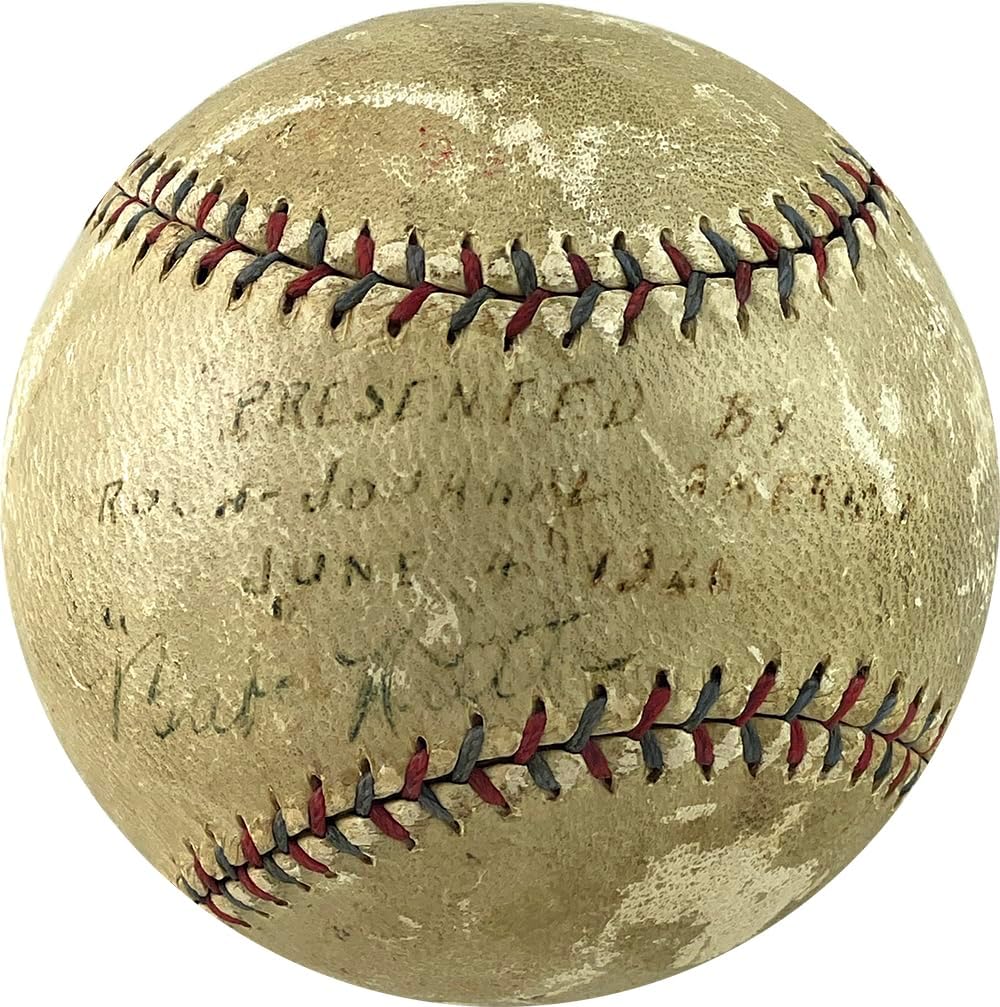
You’ve been hunting for that centerpiece item, the one that defines a collection. You’ve browsed auctions, scoured forums, and asked yourself the ultimate question: is a Babe Ruth signed baseball worth buying? It’s a monumental decision, blending passion with significant investment. For the serious collector, the answer isn’t just about the name; it’s about provenance, condition, and long-term value. Today, we’re putting a specific legend under the microscope: the Babe Ruth 1926 Signed Autographed Vintage Reach American League Baseball with JSA LOA. This isn’t just any signature; it’s a piece of baseball’s golden age, and we’re here to give you the unvarnished, expert analysis you need to decide if this is the crown jewel your collection deserves. See the current listing and full details here.
This item sits at the absolute pinnacle of sports memorabilia. It’s not a trading card pack or a modern replica; it’s a genuine artifact from the sport’s most iconic era. The product is a vintage Reach Official American League baseball, hand-signed by George Herman “Babe” Ruth himself, with an accompanying inscription dating it to 1926. The critical component that elevates it from a potential curiosity to a bankable asset is the full Letter of Authenticity (LOA) from James Spence Authentication (JSA), one of the most respected names in the business. This combination—a period-correct ball, a legendary signature from his prime, and ironclad authentication—creates a Babe Ruth signed baseball worth buying for the investor and the purist alike. It represents the ultimate trophy for a high-end sports collection. For historical context on Ruth’s monumental career, the National Baseball Hall of Fame provides authoritative background.
Unlike a sealed box with random pulls, what you see is precisely what you get—and in this case, that’s everything. The offering includes the single, definitive item: the baseball itself. The ball is a period-appropriate Reach American League model, the official ball of the league during Ruth’s playing days. The signature, “Babe Ruth,” is applied in fountain pen and shows the characteristic flow and pressure of his authentic hand. An additional inscription, “1926,” though applied by an unknown party (as noted in the description), serves to date the piece to a specific and fascinating year in Ruth’s career. Crucially, the package includes the JSA Letter of Authenticity, which is your guarantee and the bedrock of this item’s value. This is the complete package for someone asking, should I buy Babe Ruth autograph items; it leaves no room for doubt.
Given the immense value and fragility of the item, presentation and security are paramount. While specific packaging may vary by seller, a piece of this caliber should be presented in a high-quality, sealed acrylic display case. This protects the baseball’s surface and signature from dust, UV light, and physical handling. The JSA LOA should be clearly visible alongside the ball, often in a separate sleeve or mounted to the display base. The unboxing experience is one of gravity and history, not flashy graphics. It should feel substantial and secure, immediately communicating the care required for a museum-grade collectible. The presentation must match the $25,000 price point, offering both protection and a dignified way to showcase your acquisition.
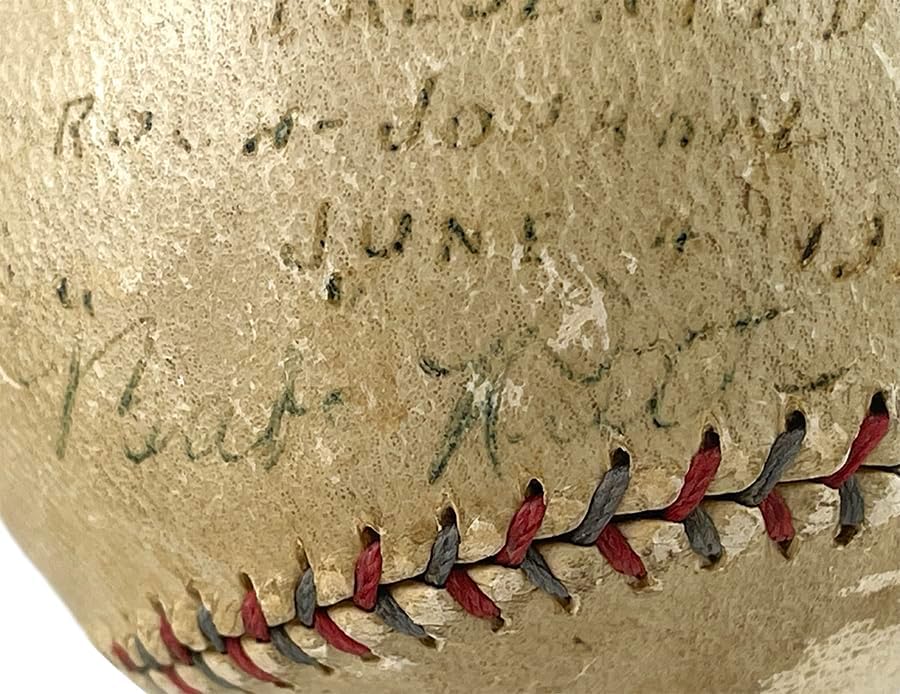
The appeal here is absolute and timeless. Babe Ruth transcends sports; he is a global icon. A signed baseball is considered the “holy grail” format for any baseball autograph collector. The rarity is extreme: authentic, period-correct Babe Ruth signed baseballs from the 1920s in any condition are exceptionally scarce. The 1926 date adds a layer of historical intrigue—it was the year he famously hit .372 with 47 home runs and a staggering .737 slugging percentage. When evaluating Babe Ruth signed baseball vs other memorabilia, such as signed photos or later-era balls, this 1926-dated piece occupies a higher echelon due to its age and proximity to his on-field peak. Investment potential is strong, as demand from elite collectors and institutions consistently outpaces the extremely limited supply. This isn’t a mass-produced modern card; it’s a finite historical document. For more on evaluating high-end collectibles, check out our guide to investing in sports memorabilia.
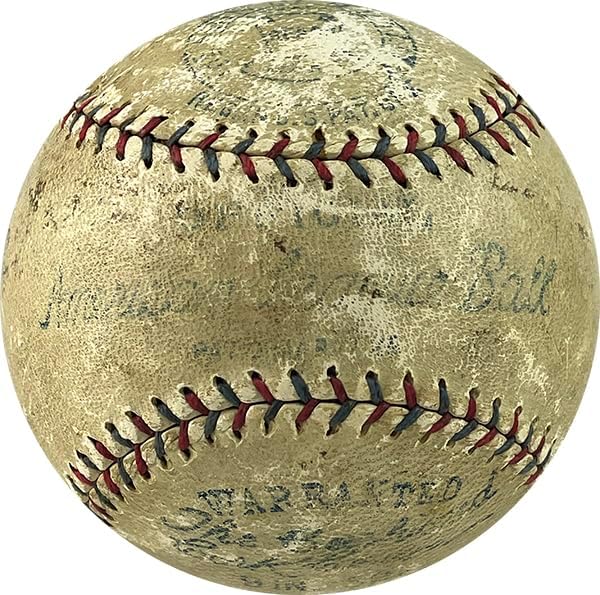
After a detailed examination of available imagery and descriptions, condition is the paramount factor. A vintage baseball from 1926 will show its age—that’s expected and part of its authenticity. Key points to assess: the leather cover’s color (a rich, darkening brown is typical), the presence of any stitching issues, and most importantly, the clarity and preservation of the signature. The ink should be firmly set, not faded or significantly cracked, though minor age-related toning is normal. The “1926” inscription must be clearly legible. The ball should retain its overall shape without major flat spots or deformities. This hands-on inspection is critical to determining the true Babe Ruth 1926 baseball value.
While baseballs like this are not typically “graded” in the same way cards are (e.g., PSA 10), they are authenticated and can be assigned a grade for the signature’s quality and the ball’s condition by services like PSA/DNA or JSA themselves. A signature graded “10” or “Mint” is exceptionally rare on a ball this old. Most will fall into the “8-9” (EX-MT) range, with deductions for slight fading, bleed, or placement. The ball’s condition is assessed separately. A high signature grade on a well-preserved period ball maximizes value. This is a core part of understanding the Babe Ruth autograph pros cons of any specific specimen.
Once acquired, preservation is non-negotiable. The ball must be kept in a climate-controlled environment (stable temperature and humidity) away from direct sunlight, which will fade the signature and degrade the leather. A sealed, UV-protected acrylic display case is mandatory for both protection and presentation. Never store it in a plastic bag, as this can trap moisture. For long-term storage beyond display, consider a professional safety deposit box or a high-end fireproof safe. Proper care is what separates a maintained asset from a deteriorating relic. Invest in a quality display case like this one to protect your investment.
When considering if this is the best Babe Ruth collectible to own, it’s essential to compare it to other forms of Ruth memorabilia. The primary competitors are other authenticated Babe Ruth signed items, like photographs, index cards, or later-era baseballs.
| Feature | 1926 Dated Reach Baseball (Reviewed) | Signed Photo (8×10) | Post-1935 Signed Baseball |
|---|---|---|---|
| Format & Era | Period-correct ball from his playing prime (1920s). | Often later studio photos, signed post-career. | Official ball, but from after his retirement era. |
| Price Point | ~$25,000+ (High) | $5,000 – $15,000 (Medium-High) | $8,000 – $20,000 (Medium) |
| Rarity & Demand | Extremely High. The most desired format from the most desired era. | High. More common than period balls, but still highly sought. | Medium-High. More available than 1920s balls, but classic format. |
| Investment Growth | Strong, steady appreciation due to pinnacle status. | Good appreciation, tied to overall Ruth market. | Moderate appreciation. |
| Collector Profile | Ultimate purist, high-net-worth investor, institution. | Serious collector, investor, major fan. | Serious collector seeking a “classic” Ruth ball. |
Choose this 1926 Reach baseball if you are seeking the absolute top-tier, most historically significant Babe Ruth signature format for a long-term hold or as the definitive centerpiece of a world-class collection. It is for those where budget is secondary to owning the best.
Consider a high-grade signed photo or a later-era signed ball if you are a serious collector who wants an undeniable Ruth autograph but has a budget under $15,000. These alternatives still offer iconic authenticity and strong value but at a more accessible tier. We explore some excellent alternatives here.
Never, ever buy a Babe Ruth autograph without third-party authentication from JSA, PSA/DNA, or Beckett Authentication. Period. Study known authentic examples to familiarize yourself with the flow, pressure, and letter formations of his signature across different eras. Be wary of balls that look too new or signatures that appear too crisp and dark on a ball showing century-old wear.
As mentioned, a climate-controlled environment is non-negotiable. Use a high-quality humidity monitor to ensure levels stay between 40-50% relative humidity. Rotate the ball in its case every few years if on permanent display to prevent light exposure from being concentrated on one spot.
Beyond the display case, consider insuring the item under a valuable articles policy from a specialist insurer like Collectibles Insurance Services. Document it with high-resolution photographs from all angles, keeping copies with your insurance documents and the JSA LOA.
The best prices are often found through reputable auction houses (Heritage, Goldin, SCP Auctions) where competition is public, or from established, high-end memorabilia dealers with longstanding reputations. Private sales can offer opportunities but require even greater due diligence.
If the ball is not already encapsulated or accompanied by a detailed grade, you may consider submitting it to JSA or PSA/DNA for a signature grade. A higher grade can significantly increase resale value. When selling, auction houses typically yield the highest prices for premier items like this due to competitive bidding.
This ball is the anchor. Build around it with related artifacts: a 1926 game program, a ticket stub, a contemporary newspaper highlighting his feats, or a high-grade baseball card from the same era. This creates a thematic, museum-quality display that tells a complete story.
Mistake: Assuming all “Babe Ruth signed baseballs” are equal. → Solution: Recognize the massive value difference between a 1920s period ball, a 1930s-40s ball, and a post-career ball. Era is everything.
Current Price: $24,999.99. This is a premium price for a premium item. When analyzing if a Babe Ruth signed baseball worth buying at this level, compare it to recent auction results for similarly dated and conditioned JSA-authenticated Ruth balls. The price is justified by the iconic year, the desirable Reach ball format, and the inclusion of the JSA LOA, which guarantees market acceptance. Deals are rare in this stratum; value is found in acquiring the right specimen, not necessarily the cheapest.
When spending at this level, purchase only from sellers with impeccable, long-standing reputations in high-end memorabilia. Amazon’s platform offers buyer protections, but ensure the seller is highly rated and specializes in collectibles. A clear, reasonable return policy (e.g., within 30 days for authenticity issues) is essential. The ability to authenticate the JSA LOA number directly with James Spence Authentication’s online database is your first verification step upon receipt.
This Babe Ruth 1926 Signed Reach Baseball with JSA LOA is a quintessential blue-chip sports collectible. Its strengths are monumental: unimpeachable authentication, a highly desirable vintage format, a date from his legendary prime, and extreme rarity. The question of should I buy Babe Ruth autograph items finds its most definitive “yes” with a specimen like this, provided the collector has the means and intent for a long-term, preservation-focused ownership.
For the qualified buyer—the serious investor or the purist collector seeking the pinnacle—this item is an unequivocal recommendation. It represents one of the safest and most prestigious acquisitions in the entire hobby. On a scale of 1-5, it earns a 5 for investment-grade collectibles. It is not a product for casual purchase, but for its target audience, it is arguably the best Babe Ruth collectible to own.
If you are positioned to make this investment, this JSA-authenticated 1926 Babe Ruth baseball is as close to a “sure thing” as exists in collectibles, offering historical significance, enduring beauty, and strong financial stability. View the listing to assess its current condition and make your decision.
For its target audience of high-end collectors and investors, absolutely. The $25,000 price reflects its status as a rare, authenticated artifact from baseball’s most iconic player during his peak. It’s a store of value and a historical piece, not a mass-produced item. Its worth is justified by its provenance, authentication, and consistent demand at the top of the market.
A signed photo is a fantastic and more accessible collectible, but it’s a different category. The 1926 baseball is a period piece from his playing days, often considered the ultimate format. Photos are typically from later years, more numerous, and command lower prices ($5k-$15k). The baseball offers greater prestige and, historically, stronger long-term appreciation potential for the Babe Ruth 1926 baseball value.
No. This is an advanced, high-value asset. Beginner collectors should start with lower-cost autographs, modern game-used items, or vintage cards to learn the market, authentication processes, and preservation techniques before considering a purchase of this magnitude.
For this item, you need a sealed, UV-protected acrylic display case (like a Ball Cube), a climate-controlled room, and insurance. For other memorabilia like cards pulled from packs, you’d need penny sleeves, top loaders, and card storage boxes. A basic preservation kit is essential for any collector.
For a Babe Ruth autograph, you rely entirely on the opinion of a major third-party authenticator (JSA, PSA/DNA, Beckett). There is no reliable “quick tip” for a novice. The LOA is everything. Verify the LOA number on the authenticator’s official website. If it doesn’t have a current LOA from one of these three, assume it’s not authentic until proven otherwise.
We recommend purchasing from this trusted retailer for competitive pricing and guaranteed authentic products. Also, monitor major sports memorabilia auction houses for comparable specimens, as public bidding can sometimes establish market value.
Since this is a single, specific item, its resale value is determined by its condition, the signature grade, and the current auction market. Well-preserved, JSA-authenticated Babe Ruth baseballs from the 1920s have consistently sold at auction for $20,000 to over $50,000+ in the last few years, with exceptional examples reaching far higher. It is a highly liquid asset in the high-end market.
1926 was a phenomenal year for Babe Ruth. He batted .372, led the league with 47 home runs, 146 RBI, and a .737 slugging percentage, and led the Yankees to the American League pennant. A ball dated to this specific season connects the artifact directly to one of his most dominant offensive performances, enhancing its historical appeal to a purist.
Stay Ahead of the Collector Community!
Get the latest pack reviews, pull rate data, market value updates, and exclusive collector deals delivered straight to your inbox. Join thousands of collectors who trust smmpacks.com!
Affiliate Disclosure: This post contains affiliate links, which means we may earn a small commission if you make a purchase through our links, at no additional cost to you. This helps support smmpacks.com and allows us to continue delivering in-depth collectibles content for our community. We only recommend products we have personally handled, tested, or thoroughly researched. Thank you for your support!