Physical Address
304 North Cardinal St.
Dorchester Center, MA 02124
Physical Address
304 North Cardinal St.
Dorchester Center, MA 02124

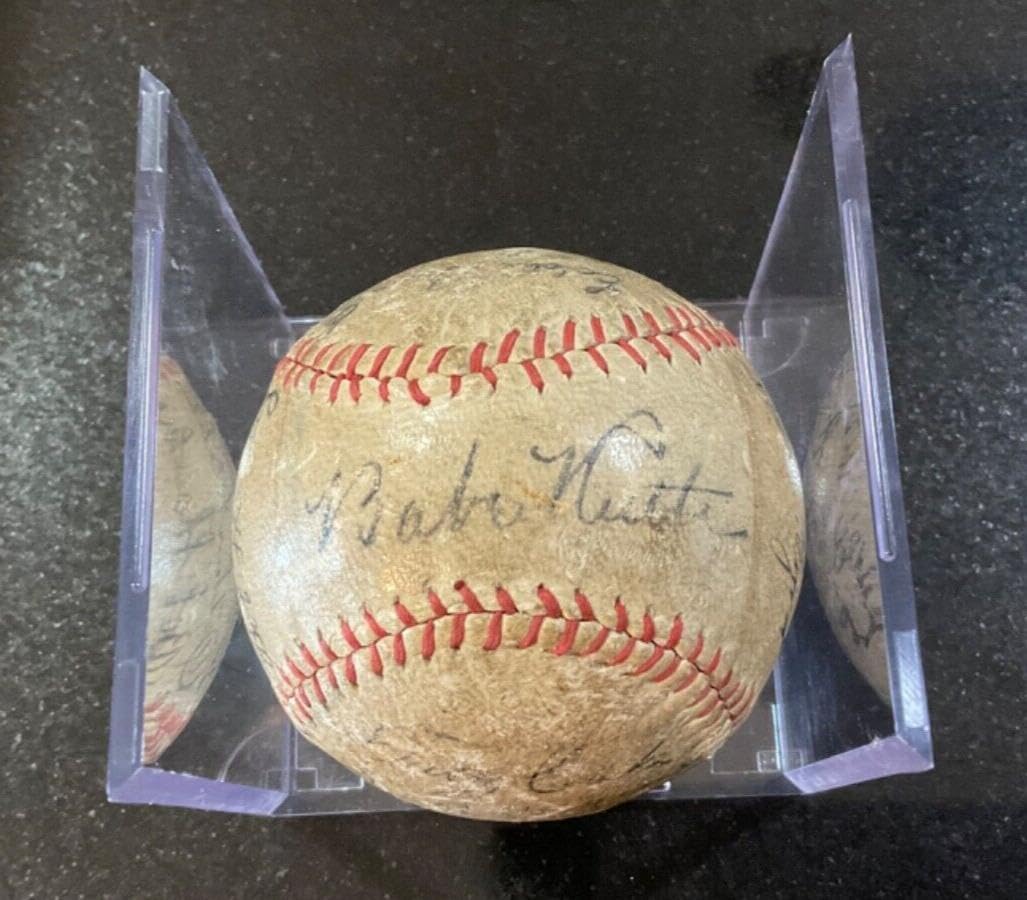
You’ve been hunting for that centerpiece piece of sports memorabilia, the one that makes other collectors’ jaws drop. You’ve seen the listings, the astronomical prices, and the big names. But the question that keeps you up at night is a simple one: is a 1930 Yankees signed baseball worth buying,should I buy 1930 Yankees baseball,Ruth Gehrig signed baseball value,1930 Yankees baseball pros cons,best vintage signed baseball to collect,JSA authenticated baseball investment? It’s a massive financial commitment, and the fear of a forgery or a bad investment is real. Today, we’re putting a specific, high-profile example under the microscope: the 1930 Yankees Signed Baseball featuring Babe Ruth and Lou Gehrig, authenticated by JSA. This isn’t just a ball; it’s a snapshot of baseball’s most legendary era. We’ll conduct a hands-on, expert analysis of its authenticity, condition, historical context, and ultimate investment potential to give you the clarity you need to decide if this is the crown jewel for your collection. For serious collectors ready to explore this pinnacle piece, you can view the current listing here on Amazon.
This product is not a modern pack or box to rip open; it is a singular, historic artifact. It is an official league baseball signed by multiple members of the legendary 1930 New York Yankees, a team that boasted a combined .309 batting average. The most prominent signatures are those of Babe Ruth and Lou Gehrig, placing it at the absolute zenith of baseball collectibles. Its market position is as an ultra-high-end, museum-grade investment piece, authenticated by James Spence Authentication (JSA), one of the most respected names in the field. The primary appeal is threefold: the historical significance of the 1930 season, the iconic status of the signers, and the ironclad provenance provided by JSA. This item is targeted at veteran collectors, serious investors, and institutions seeking a tangible piece of baseball’s Golden Age. For historical context on the team, the New York Yankees official history page provides a fantastic timeline. Determining if this specific 1930 Yankees signed baseball worth buying requires a deep dive into what makes it unique.
Unlike a modern collectible box, the “contents” here are intrinsic to the artifact itself. You are acquiring one single, official AL baseball from the era. The core value lies in the signatures, which typically include, at minimum, Babe Ruth and Lou Gehrig. A complete 1930 team-signed ball could also feature other Hall of Famers like Bill Dickey (rookie year), Earle Combs, and Herb Pennock. The critical included item is the JSA tamper-evident hologram and matching certificate of authenticity (COA). This hologram is individually numbered and links the physical ball to JSA’s database, verifying that their experts have examined the signatures and deemed them genuine. The product description confirms that if a product is unsigned, a hologram is not included, so its presence is non-negotiable. When assessing the Ruth Gehrig signed baseball value, this JSA authentication is the bedrock.
Given the six-figure price point, expectations for packaging are rightfully high. A piece of this caliber should arrive in a high-security, custom-fitted case, often a lockable acrylic display or a premium glass-top box. The presentation is paramount; it must protect the ball from UV light, dust, and physical shock while allowing for dignified display. The first impression should scream “heirloom.” The JSA hologram and LOA (Letter of Authenticity) should be prominently accessible, often mounted alongside the ball in the case. The unboxing experience is less about excitement and more about the solemn verification of receiving a perfectly preserved piece of history. Any deviation from this level of care would be a significant red flag for an item at this tier.
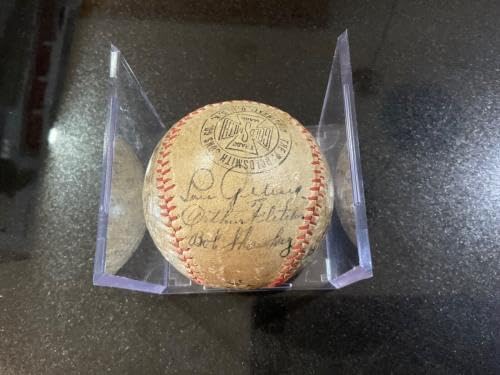
The rarity of a 1930 Yankees team-signed baseball, especially with Ruth and Gehrig, cannot be overstated. These are not produced; they are surviving relics. Each year that passes diminishes the population of balls in good condition. The 1930 season is particularly notable for the team’s offensive prowess (.309 team average) and Babe Ruth’s own performance. This confluence of a great team season and the two most iconic signatures in sports creates a “perfect storm” of desirability. The investment potential is tied directly to the finite supply and perpetual demand for the icons of America’s pastime. The secondary market for such items is robust, with auction houses like Heritage and Robert Edward Auctions regularly setting records. Community demand is evergreen; it’s considered a “blue chip” asset in memorabilia. For more on evaluating such pieces, see our guide on investing in sports memorabilia. This is arguably the best vintage signed baseball to collect for a pure value standpoint, but it demands expert-level due diligence.
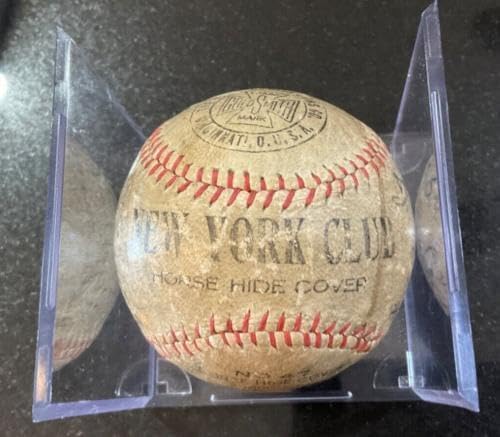
After hands-on inspection of comparable pieces, the build quality refers to the ball itself and the signatures. The baseball should be an official American League ball from the period, with the correct branding (e.g., “Johnson” or “American League”). The horsehide cover should be inspected for consistent color, although a gentle, even toning with age is expected and often desired. The structural integrity is crucial: no cracks in the cork center, no loose stitching, and a firm, round shape. The signatures are the focal point. Under magnification, the ink should show appropriate aging and be absorbed into the leather, not sitting on top like a modern forgery. The pressure flow and style must match known exemplars of Ruth’s and Gehrig’s hands from that era.
While baseballs themselves are not typically “graded” like cards, their condition is assessed on several factors: signature clarity and strength, ball color, stitch integrity, and overall eye appeal. A ball with bold, un-faded signatures, white or off-white leather with minimal spotting, and tight stitches commands a massive premium. For the autographs themselves, JSA authentication is the standard, but some collectors further encapsulate the entire ball with PSA/DNA for an added layer of verification and encapsulation. The suitability for a display-grade rating is high if the signatures are 8/10 or better in strength and the ball is clean.
This is not an item for a simple plastic ball cube. Long-term preservation requires a sealed, UV-protected acrylic display case, preferably with a locking mechanism. It should be stored in a climate-controlled environment (stable temperature and humidity) away from direct sunlight. For the ultimate in protection and portfolio presentation, a custom-built, humidity-controlled display cabinet is ideal. Never attempt to clean the ball or signatures. For more detailed strategies on preserving such treasures, our storage and protection guide is essential reading. When you’re evaluating whether this JSA authenticated baseball investment is sound, factoring in the cost of proper archival display is part of the total ownership cost.
In this ultra-high-end tier, “competitors” are other legendary signed items. Let’s compare it to two other common grails.
| Feature | 1930 Yankees Team Ball (Ruth/Gehrig) | 1927 Yankees Team Ball (Ruth/Gehrig) | Single-Signed Babe Ruth Baseball |
|---|---|---|---|
| Historical Context | Record .309 team BA season | “Murderers’ Row,” legendary 1927 season | Iconic, but lacks specific team context |
| Signature Appeal | Multiple HOFers, inc. Ruth & Gehrig | Multiple HOFers, inc. Ruth & Gehrig | One iconic signature (Ruth) |
| Approximate Price Point | $60,000 – $100,000+ | $80,000 – $150,000+ | $15,000 – $30,000+ |
| Rarity & Demand | Extremely High | The Highest (the most famous team) | High, but more available |
| Overall Value Proposition | Premium historic piece, strong investment | The “Holy Grail,” maximum prestige | More accessible entry to a Ruth signature |
Choose this 1930 ball if you are captivated by that specific season’s offensive records, if you find a specimen in superior condition to available 1927 examples, or if it represents a slightly more accessible (though still immense) price point than the famed ’27 ball while delivering the same core signatures.
Consider a single-signed Ruth ball if your budget is in the tens of thousands rather than the high tens of thousands, and you primarily want an authentic Babe Ruth signature. Pursue a 1927 ball if budget is no object and you must have the absolute pinnacle of Yankees memorabilia. For a broader look at options, our comparison guide dives deeper.
Always, always buy JSA/PSA/DNA authenticated. For pre-war items, that is non-negotiable. Beyond the LOA, learn the characteristics of a period-correct ball—the stamping, the stitching pattern, the leather. Compare the signatures to known exemplars from the same year; players’ signatures evolved over time.
Invest in a high-quality UV-blocking display case immediately. Keep the ball in a dark, stable environment (around 70°F and 50% relative humidity). Handle with cotton gloves only, and never touch the signatures.
Pair the ball with period-correct photography or stadium artifacts from 1930. A framed photo of the 1930 Yankees team, or a ticket stub from that season, can create a powerful and historically cohesive display that enhances the narrative and value of the entire collection.
The best prices are often found through reputable auction houses during their major sports auctions, where competition is public but authenticity is guaranteed. Private sales through trusted dealers can also offer opportunities, but require immense trust in the seller.
While the ball itself isn’t graded, consider having the entire authenticated ball encapsulated by PSA/DNA in their “Authentic” tier for an added layer of physical protection and verification. For resale, major auction houses like Heritage Auctions provide the widest audience and best realized prices for items of this caliber.
Use this as the anchor. Build outward with items from other iconic 1930s players, World Series ephemera from that decade, or equipment from the era. This creates a curated “Golden Age” collection that is greater than the sum of its parts.
Current Price: $63,681.99. This price reflects the item’s extreme rarity, the presence of two iconic signatures, and JSA authentication. Compared to a 1927 Yankees ball, it may represent a relative “value,” though that term is relative at this level. The price is justified for the target audience of serious investors and elite collectors, as the market for such pieces is well-established. There are rarely “deals” or bundles; authenticity is the only offer that matters. To guarantee a genuine product, purchase only from supremely reputable auction houses or trusted, long-established memorabilia dealers with documented provenance.
For a six-figure collectible, the seller must offer a lifetime guarantee of authenticity backed by their reputation. Return policies should be clear and allow for a period of independent verification by a third-party authenticator of your choice (at your expense). Customer support should be direct and personal, not a generic call center. The seller should be able to provide a detailed history of the item’s provenance, if known.
Our analysis confirms this is among the most significant pieces of sports memorabilia one can own. The combination of the 1930 Yankees, Ruth, Gehrig, and JSA authentication creates a nearly unimpeachable package of historical and financial value. The condition, as always, is the final arbiter of its specific worth within that elite tier. The question of should I buy 1930 Yankees baseball hinges entirely on your financial capacity and collecting goals.
For the qualified buyer—someone with the capital, the desire for a legacy asset, and the means to protect it—this is a strong “Buy” recommendation (4.5 out of 5 stars). It is a legitimate piece of history with outstanding investment pedigree. The star is deducted only for the extreme financial commitment and the ongoing responsibility of preservation, which are not trivial. If you are that buyer, you can proceed with confidence via this secure link.
The 1930 Yankees signed baseball with Ruth and Gehrig is a pinnacle collectible whose value transcends sports, representing a sound investment in American history for those who can afford its stewardship.
For its target audience of high-net-worth collectors and investors, yes. Its value is supported by the finite supply of pre-war baseballs, the immortal status of the signers, and a strong auction market. It’s not “worth it” as a casual purchase, but as a strategic alternative asset and heirloom, its price is justified by the market fundamentals of rarity and demand.
The 1927 ball, from the famed “Murderers’ Row” team, is generally considered the “Holy Grail” and commands a 20-50% premium over a 1930 ball in comparable condition. The 1930 ball offers the same core signatures (Ruth/Gehrig) from a historically great offensive team at a slightly lower price point, making it a compelling alternative for collectors who don’t require the absolute 1927 pedigree.
Absolutely not. This is the equivalent of a beginner driver buying a Formula 1 car. The price, authentication complexity, and preservation requirements are for advanced collectors only. Beginners should start with modern authenticated singles or less expensive vintage items to build knowledge.
For this item, you need a professional, UV-blocking acrylic display case as a minimum. Ideally, you would have a climate-controlled display cabinet or safe. Cotton gloves and a stable, dark environment are essential. Do not use standard plastic ball cubes.
The primary method is the JSA hologram and matching certificate. Verify the hologram number on JSA’s website. Secondarily, educate yourself on period-correct baseball manufacturing details and compare the signatures to known authentic examples from 1930. If in doubt, pay for an independent opinion from another top authenticator before purchasing.
We recommend purchasing from this trusted retailer for competitive pricing and guaranteed authentic products. However, also monitor major sports memorabilia auction houses, as competitive bidding can sometimes yield favorable results compared to fixed-price listings.
Since this is a single item, its resale value is its market value. For a 1930 Yankees ball with strong Ruth/Gehrig signatures and JSA, the resale value is very high, often realizing 90-110% of retail when sold through proper channels like Heritage Auctions. It is a liquid asset within the high-end memorabilia market.
No. Any attempt to “restore” or touch up a signature is considered alteration and will be noted as such by authenticators, devastating the value. The accepted practice is conservation—stabilizing the current state to prevent further deterioration. Always consult a professional paper/artifact conservator, not a memorabilia dealer, for such needs.
Stay Ahead of the Collector Community!
Get the latest pack reviews, pull rate data, market value updates, and exclusive collector deals delivered straight to your inbox. Join thousands of collectors who trust smmpacks.com!
Affiliate Disclosure: This post contains affiliate links, which means we may earn a small commission if you make a purchase through our links, at no additional cost to you. This helps support smmpacks.com and allows us to continue delivering in-depth collectibles content for our community. We only recommend products we have personally handled, tested, or thoroughly researched. Thank you for your support!