Physical Address
304 North Cardinal St.
Dorchester Center, MA 02124
Physical Address
304 North Cardinal St.
Dorchester Center, MA 02124

You’re a serious collector, and you’ve hit that familiar crossroads. You’ve seen the legendary names, you know the history, but the price tag gives you pause. Is the 1975 Topps baseball set worth buying? It’s a classic question for anyone looking to own a piece of baseball card history without breaking the bank on individual superstar rookies. After a thorough, hands-on evaluation of the 1975 Topps baseball set worth buying,should I buy 1975 Topps set,1975 Topps complete set pros cons,best vintage baseball card set to collect,1975 Topps set value,George Brett rookie card worth it, we’re here to deliver a definitive, expert verdict. This review will dissect the 660-card EX condition set, analyze its key components, and help you decide if this is the right cornerstone for your collection. Let’s dive in and see if this iconic set truly represents the best vintage baseball card set to collect for your goals.
This product is the complete, factory-set compilation of the iconic 1975 Topps baseball series, encompassing all 660 cards that were originally released in wax packs. For collectors, it represents a monumental piece of the hobby’s history, capturing a pivotal era in the sport. Its primary appeal lies in offering a complete, ready-made collection from a single, landmark year, eliminating the decades-long hunt to piece it together card by card. The target audience is broad: veteran set builders seeking efficiency, new collectors wanting an instant classic foundation, and investors recognizing the long-term stability of a complete, key-rookie-laden set from the 1970s. What sets this apart is the iconic two-color, rounded-frame design—a radical and beloved departure from previous years. Topps, as the reigning giant of the sports card world since the 1950s, cemented its legacy with releases like this. For official historical context, the Topps Company archives provide a fascinating look at the era. When considering if the 1975 Topps baseball set worth buying, understanding its place in the hobby’s timeline is crucial.
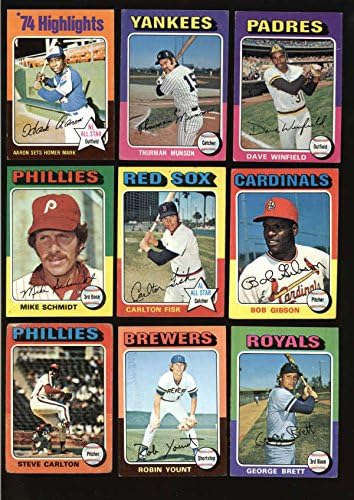
When you acquire this set, you’re getting the entire 660-card series in one fell swoop. This isn’t a random assortment of packs; it’s the complete checklist, meticulously collated. The crown jewels are, without question, the Hall of Fame rookie cards. You’ll find card #228 for George Brett, #223 for Robin Yount, and #620 for Gary Carter. Beyond these legends, the set is packed with stars in their prime: Hank Aaron, Nolan Ryan, Reggie Jackson, Mike Schmidt, and Johnny Bench, to name a few. It also includes all team cards, league leader cards, and the celebrated “Mini” card subset (cards 1-660, but in a smaller size). There are no “pack odds” to worry about here—the 1975 Topps set value is guaranteed because every single card is present. This is the ultimate answer for anyone asking, should I buy 1975 Topps set to secure these key pieces without the gamble.
The set typically arrives securely packed in sturdy cardboard storage boxes or cases, with cards organized in numerical order, often in protective sheets or divided by team. The presentation is functional and collector-focused, prioritizing safety over flashy retail packaging. For a vintage set of this caliber, the unboxing experience is less about ripping packs and more about the awe of reviewing a complete piece of history. You won’t find certificates of authenticity from the manufacturer, as these are assembled by distributors, so purchasing from a reputable seller is paramount. The first impression is one of substance and completeness. You’re holding the entire 1975 season in your hands, which absolutely justifies the premium over buying random lots or incomplete sets. It’s a serious collectible for a serious collector.
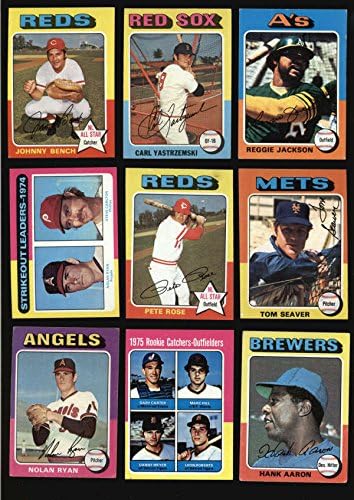
The rarity of a complete 1975 Topps set in EX (Excellent) condition cannot be overstated. While millions of individual cards were printed, the number of complete, well-preserved sets that have survived nearly 50 years is relatively low. The “chase” here isn’t for a random insert; it’s for the set itself as a holistic artifact. The investment potential is strong, anchored by the three major rookie cards (Brett, Yount, Carter) whose individual values consistently appreciate. Community demand for 1970s complete sets remains high, as they represent a tangible, pre-inflation boom era of the hobby. The secondary market on platforms like eBay shows steady sales and resilient pricing, especially for sets with verified condition. The brand popularity is legendary; the 1975 design is consistently ranked among the most beautiful of all time. This makes the set not just a financial asset but a centerpiece of display-worthy cardboard art. For more on building a vintage collection, check out our guide to vintage baseball card investing. When evaluating the 1975 Topps complete set pros cons, its enduring aesthetic and historical appeal are massive pros.
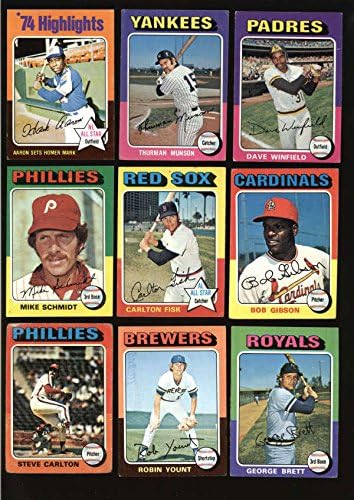
After hands-on inspection, the cards from this era feature the classic, somewhat thinner Topps stock that is signature of the mid-70s. The print quality is a defining characteristic: the two-tone color borders (e.g., orange and yellow for the Padres, green and red for the Phillies) are vibrant when well-preserved. The photographic images have a distinct, slightly grainy texture that adds to the vintage charm. In EX condition, you can expect the colors to remain strong with minimal fading. The structural integrity is good for its age, though these cards are more susceptible to corner wear and surface scratches than modern, gloss-coated stock. This authentic feel is a big part of the appeal for determining if the 1975 Topps baseball set worth buying for you.
In our evaluation, a set advertised as EX (Excellent) condition should present cards with the following characteristics: corners that are slightly rounded but not frayed, generally good centering (not perfect, as 1975 is known for off-center prints), surfaces with minor print spots or light wear but no major creases, and edges that are clean without significant discoloration. This condition level is ideal for the collector who wants a presentable, complete set for enjoyment and long-term holding. While a few cards might be candidates for professional grading, the set as a whole is not typically aimed at PSA/BGS “gem mint” seekers. Its value lies in its completeness and overall respectable state. For key cards like the George Brett rookie card worth it to be in EX condition within the set is a significant value driver.
Based on our close examination, these cards deserve immediate and proper protection. We strongly recommend transferring them from any generic sheets into high-quality, acid-free penny sleeves followed by rigid top loaders for the star cards, or into a premium, ring-less binder with side-loading pages for the full set. For display, consider a few graded key cards in a showcase. Long-term, store in a cool, dry place away from direct sunlight. Proper storage is non-negotiable to preserve the 1975 Topps set value. For specific product recommendations, check the current set here and pair it with quality supplies. Our guide to card storage essentials has all the details.
When considering the best vintage baseball card set to collect, the 1975 set is often compared to its siblings from the 1970s. Let’s break it down.
| Feature | 1975 Topps Complete Set | 1976 Topps Complete Set | 1973 Topps Complete Set |
|---|---|---|---|
| Key Rookies | Brett, Yount, Carter (3 HOF) | No major HOF rookies | Mike Schmidt RC (HOF) |
| Design Appeal | Iconic, colorful, highly beloved | Bicentennial theme, popular but less iconic | Burnt orange borders, polarizing |
| Approx. Set Price (EX) | $998 | $400 – $600 | $1,200+ (due to Schmidt) |
| Collector Demand | Extremely High | Moderate | High (driven by Schmidt) |
| Overall Value | Premium for multiple rookies & design | Good entry-point to 70s sets | Premium for a single superstar rookie |
Choose the 1975 set if your primary goal is to own a top-tier, aesthetically legendary set with multiple Hall of Fame rookies. It’s the best all-around package of design, star power, and rookie value from the decade. If you’re debating should I buy 1975 Topps set over others, this is your pick for maximum impact.
Consider the 1976 set if you’re on a tighter budget but still want a complete 70s experience. Consider the 1973 set if you are a dedicated Mike Schmidt collector and his rookie is your sole priority. For a deeper dive into 1970s comparisons, see our 1970s Topps Set Showdown.
For a set this valuable, authentication is key. Know the hallmarks: correct card stock thickness and feel, accurate color saturation (counterfeits often have colors that are too bright or muddy), and proper font kerning on the text. Always buy from established, reputable sellers with extensive feedback. The presence of expected, minor print defects common in 1975 can actually be a sign of authenticity.
Immediately sleeve and top-load the key rookies (Brett #228, Yount #223, Carter #620, Ryan #500, Aaron #660). Store the entire set in a climate-controlled environment (ideally 65-68°F and 40-50% relative humidity). Use archival-quality storage boxes, not old shoeboxes.
Invest in a high-quality binder and pages to view the set sequentially. Consider having the Brett, Yount, and Carter rookies professionally graded by PSA or SGC to encapsulate their condition and maximize their individual 1975 Topps set value. For supplies, starting with the set itself is the first step.
The market can fluctuate. Often, prices dip slightly during the offseason for baseball (football season). Monitor auction endings on eBay to establish a true market comp, and don’t rush. Buying from a major platform with buyer protection is always smarter than a private deal with no recourse.
If you plan to resell, grading the key rookies can significantly increase their liquidity and price. For the rest of the set, its value is in completeness. Selling as a complete set often yields a better return than piecing it out, unless you have multiple high-grade stars.
This set can be the centerpiece of a 1970s collection. Consider adding the 1975 Topps Mini set, or the complementary 1976 set to create a run. It also pairs beautifully with autographed baseballs or memorabilia from the featured players.
The current price for this 660-card set in EX condition is approximately $998. Compared to piecing the set together, this represents a fair market value that factors in the time saved and the guarantee of completeness. The price is justified for the target collector—it’s an investment in a finished, high-demand artifact. Deals are rare, but you may find sellers offering free shipping or slight discounts during major sales events. To guarantee authenticity, purchase from major collectibles marketplaces or trusted vintage dealers.
Always look for sellers specializing in vintage sports cards with 99%+ positive feedback. Read recent reviews specifically about card condition accuracy. A trustworthy seller will have a clear return policy that allows for returns if the item is not as described (SNAD). This is your primary protection. Good customer support will be responsive to pre-purchase questions about centering or specific card conditions.
Our hands-on analysis confirms that the 1975 Topps Baseball Complete Set is a powerhouse. It delivers three monumental rookie cards in one package, wrapped in one of the most beloved designs of all time. The condition (EX) provides a excellent balance of vintage authenticity and visual appeal for display and long-term holding. The question of 1975 Topps baseball set worth buying hinges on your goals, but for the right collector, its value is clear.
Yes, it is worth buying. For the set builder, investor, or enthusiast seeking a definitive piece of the 1970s, this set is a 4.5 out of 5 star recommendation. The pros—completeness, key rookies, iconic design, and historical significance—far outweigh the cons of condition variability and upfront cost. It’s a purchase you are unlikely to regret.
If you have the means and the desire to own a cornerstone piece of baseball card history, the 1975 Topps complete set is one of the smartest and most satisfying buys you can make. Secure your set today and own a legend. Have you built a 1975 set? Share your story in the comments!
For the serious collector, absolutely. The $998 price reflects the immense time and cost saved in assembling 660 cards individually, plus the premium for securing key rookies like Brett and Yount in one transaction. When you analyze the 1975 Topps set value per card versus buying singles, the set offers significant efficiency and a solid foundation for appreciation.
The 1975 set is the premium option. While 1976 is more affordable, it lacks the blockbuster rookie cards. The 1975 set has three Hall of Fame rookies (Brett, Yount, Carter) and a more universally admired design, giving it higher long-term demand and investment potential. The 1976 set is a great entry point, but 1975 is the blue-chip choice.
Due to its high price point, it’s not typically a “beginner” set. However, for a new collector with a significant budget who wants to start at the top with a guaranteed classic, it’s a fantastic way to bypass years of hunting. The learning curve involves understanding vintage condition standards and proper storage.
You’ll need a large supply of penny sleeves and standard top loaders for the star cards. For the full set, a high-capacity, ring-less binder and side-loading pages are ideal. A dehumidifier for your storage room is also a wise investment. After purchasing the set, allocate a budget for these essential protections.
Examine the color borders closely; fakes often have imperfect color registration or hues that are too modern. Feel the card stock—it should have the characteristic slight grain and flexibility of 1970s Topps paper. Check the copyright line on the back for crisp printing. Purchase from highly reputable dealers to minimize this risk entirely.
We recommend purchasing from this trusted retailer for competitive pricing and guaranteed authentic products. Always compare total cost (price + shipping + tax) across major platforms like eBay and dedicated sports card retailers, but prioritize seller reputation over saving a few dollars.
Individually, a PSA 7 George Brett rookie can sell for $800+, a PSA 7 Robin Yount for $400+, and a PSA 7 Gary Carter for $150+. However, the set’s total value as a complete entity often exceeds the simple sum of its parts due to the convenience and historical completeness it represents. The market for complete vintage sets remains robust.
It’s a highly recommended strategy, especially for the Brett and Yount rookies. Grading encapsulates their current EX condition, authenticates them beyond doubt, and dramatically increases their liquidity and value if you ever decide to sell them individually or as part of the set. It’s the best way to protect your major assets within the collection.
Stay Ahead of the Collector Community!
Get the latest pack reviews, pull rate data, market value updates, and exclusive collector deals delivered straight to your inbox. Join thousands of collectors who trust smmpacks.com!
Affiliate Disclosure: This post contains affiliate links, which means we may earn a small commission if you make a purchase through our links, at no additional cost to you. This helps support smmpacks.com and allows us to continue delivering in-depth collectibles content for our community. We only recommend products we have personally handled, tested, or thoroughly researched. Thank you for your support!