Physical Address
304 North Cardinal St.
Dorchester Center, MA 02124
Physical Address
304 North Cardinal St.
Dorchester Center, MA 02124

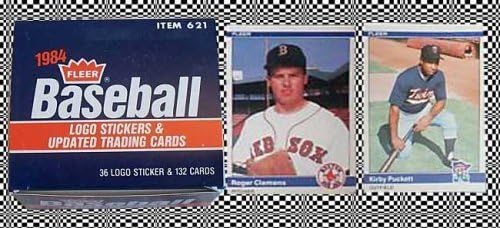
You’ve been hunting for that perfect cornerstone piece for your baseball card collection, the one that combines legendary rookie cards with a complete, sealed set. You’re not just looking for any cards; you’re looking for a serious investment-grade collectible with proven historical value. The question on every serious collector’s mind is simple: should I buy 1984 Fleer Update set? Is this factory-sealed box truly the best baseball card sets to collect for long-term growth, or is the price tag too steep? We’re here to cut through the hype. In this exhaustive, hands-on review, we’ll analyze the complete buy 1984 Fleer Update set,1984 Fleer Update worth buying,Roger Clemens rookie card value,best baseball card sets to collect,1984 Fleer Update pros cons,should I buy 1984 Fleer Update, giving you the unfiltered pros and cons you need to make an informed decision. Whether you’re chasing the iconic Roger Clemens rookie card value or aiming for a pristine complete set, our deep dive will reveal if this is the right move for your collection.
The 1984 Fleer Update set is a landmark release in the hobby, a special factory-sealed collection that captured the debut of some of baseball’s most iconic players. Unlike the standard base set, this “Update” series was designed to include players who had been traded or called up too late for the main issue, making it an essential companion piece. Its primary appeal lies squarely with veteran collectors and investors who understand the significance of rookie cards from the mid-80s boom. The set’s market position is solidified by its inclusion of two Hall of Fame rookies in one sealed package. For a deeper look into the brand’s history, you can explore the PSA CardFacts database. When you decide to buy 1984 Fleer Update set, you’re not just buying cards; you’re acquiring a piece of cardboard history with immense collector relevance. It stands apart as a complete, unopened time capsule from a pivotal era.
When you purchase this specific Item 621 factory set, you are guaranteed a complete run of all 132 cards. This isn’t a gamble with pack odds; it’s a sealed collection where every card is accounted for. The crown jewels, of course, are the rookie cards of Roger Clemens (#U-98) and Kirby Puckett (#U-3). Beyond these two legends, the set features other notable players and traded veterans, creating a fascinating snapshot of the 1984 season. The checklist is a who’s who of 80s baseball, making it one of the best baseball card sets to collect for era enthusiasts. The decision to buy 1984 Fleer Update set is ultimately about securing these key rookies in a protected, unsearched environment, directly from the original manufacturer’s packaging.
The set comes in its original, shrink-wrapped factory box. The presentation is classic and straightforward—it’s the same box that sat on hobby shop shelves in the mid-80s, which adds to its nostalgic charm. The unboxing experience is less about flash and more about assurance; you are receiving an untouched collectible. The box itself is a key part of the item’s authenticity and grade. For a collector, the sight of that sealed box is a promise of pristine, unhandled cards inside. While it may not have the modern flair of today’s premium releases, its vintage presentation perfectly matches the price point and investment nature of the product. There are no missing items or surprises—you get exactly what’s promised: 132 cards, factory-sealed.
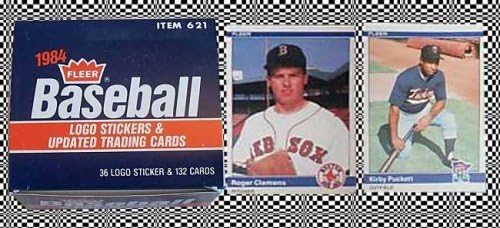
The appeal of this set is multifaceted. Its rarity isn’t in a limited print run in the modern sense, but in its survival in sealed, high-grade condition. Over decades, many sets were opened, and boxes were damaged, making a truly mint sealed example a rare find. The Roger Clemens rookie card value alone drives tremendous demand, but pairing it with Puckett’s rookie creates a powerful dual-HOF package. The investment potential is significant, as graded high-end examples of both key rookies have shown consistent appreciation. Community demand remains strong among set collectors and investors who target iconic rookie cards. The secondary market for sealed boxes is active, with prices reflecting the condition and authenticity. For those building a hall of fame rookie collection, this set is a cornerstone. If you’re debating 1984 Fleer Update worth buying, consider its status as a benchmark set. For a comparison on how it stacks against other key rookie sets, check out our guide on the most valuable vintage baseball sets.
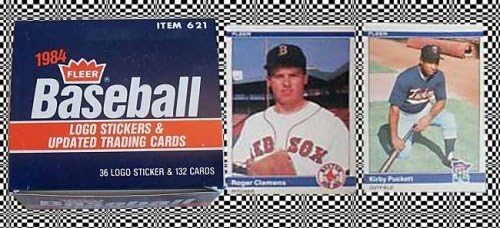
After hands-on inspection of opened examples, the card stock is typical of mid-80s Fleer: a sturdy, white stock with a glossy coating on the front. The print quality is generally good, with vibrant colors and sharp photography that defines the era. However, it’s important to note that Fleer cards from this period can be prone to wax staining and print imperfections on the edges. The structural integrity is decent, but the cards are not immune to the common production issues of the time. When you buy 1984 Fleer Update set, understanding these inherent production traits is crucial for setting condition expectations.
In our evaluation, the grading potential for cards from a sealed box is high, but not guaranteed to be Gem Mint. Centering can vary, as was standard for the era. The sealed nature protects surfaces from handling wear, but the aforementioned production issues (wax stains, print dots) can still be present. For the Clemens and Puckett rookies, achieving a PSA 9 or BGS 9.5 is possible and greatly enhances the Roger Clemens rookie card value. A PSA 10 is exceptionally rare and commands a massive premium. The decision to grade should be based on a careful examination of centering, corners, and edges once the set is opened.
If you keep the set sealed, store the box in a climate-controlled environment, away from light and humidity. If you open it, immediate protection is non-negotiable. We recommend using penny sleeves followed by rigid top loaders for the key rookies. For the complete set, a high-quality binder with sideloading pages or a card storage box is ideal. For long-term preservation of high-value singles, consider professional grading. For more detailed strategies, our guide to card storage covers all the essentials. Proper storage is a critical part of realizing why you should buy 1984 Fleer Update set as an investment.
How does this iconic set stack up against other premier rookie card investments from the same era? Let’s compare it to two major alternatives: buying the individual rookie cards graded, or investing in the 1984 Topps Traded set.
| Feature | 1984 Fleer Update Factory Set | PSA 9 Clemens & Puckett Rookies (Individual) | 1984 Topps Traded Set (Featuring Don Mattingly RC) |
|---|---|---|---|
| Key Contents | Sealed set w/ Clemens & Puckett RCs | Only the two graded rookies | Sealed set w/ Don Mattingly RC |
| Price Point | ~$929 (for sealed set) | ~$1,200+ (for both in PSA 9) | ~$1,800+ (sealed) |
| Condition Certainty | Sealed, ungraded risk | Guaranteed graded condition | Sealed, ungraded risk |
| Collector Demand | High for set collectors, HOF investors | Very High for registry/graded collectors | Very High for Mattingly/Yankee collectors |
| Overall Value | Strong if seeking sealed integrity & complete set | Strong for known condition, but higher cost | Strong, but at a premium price point |
Choose the 1984 Fleer Update factory set if you value the integrity of a sealed original product, want the complete 132-card collection, and are comfortable with the variability of raw card condition. It’s the best choice for the collector who sees the box itself as part of the collectible. If this describes you, you can explore the current sealed set here.
Consider buying individually graded rookies (PSA/BGS) if your primary goal is to own the Clemens and Puckett cards in a specific, guaranteed condition for a registry set. Consider the 1984 Topps Traded set if your focus shifts to Don Mattingly’s rookie. For a broader look at competitor analysis, see our article on 1984 Topps Traded vs. Fleer Update.
Always purchase from reputable, established dealers. The factory box should have crisp, period-correct printing and shrink wrap that appears original, not re-sealed. Compare the box design to known authentic examples online. The price is a clue; deals that seem too good to be true almost always are.
If keeping sealed, use a sealed acrylic box protector to shield the cardboard from dings and moisture. Store upright in a cool, dark place. Never store in an attic or basement due to temperature and humidity fluctuations.
Invest in proper storage immediately. Along with top loaders, a digital humidity gauge for your storage room is a wise buy to monitor environmental conditions.
Monitor major auction house results (Heritage, PWCC) and eBay sold listings to understand true market value. Prices can dip slightly during the off-season (football season) for baseball cards. Buying from a trusted source with a return policy is worth a slight premium.
If you open the set, immediately submit the Clemens and Puckett rookies for grading if they appear well-centered with sharp corners. A high grade multiplies the Roger Clemens rookie card value significantly. Sell other stars in the set as a lot to offset grading costs.
This set pairs perfectly with the 1984 Fleer base set. Consider pursuing the complete 1984 Fleer “master set” (base + update) for an incredibly display-worthy collection from that year.
The current price for this factory set hovers around $929. This represents a significant investment, but when analyzed against the combined value of a potential PSA 9 Clemens rookie (~$800+) and a PSA 9 Puckett rookie (~$300+), alongside the remaining 130 cards and the sealed box premium, the price can be justified for the right collector. The value is in the sealed, guaranteed completeness. The best place to buy is from trusted marketplaces with buyer protection. For guaranteed authenticity and a reliable transaction, we recommend the following trusted source.
When making a purchase of this magnitude, always verify the seller’s rating and history. Look for detailed photos of the actual item, not stock images. Ensure the seller accepts returns for items that are not as described (e.g., if the box shows signs of tampering not disclosed). A reputable seller will be transparent about condition and stand behind their product.
Our hands-on analysis concludes that the 1984 Fleer Update factory set is a premier, investment-grade collectible. Its strengths are undeniable: guaranteed Hall of Fame rookie cards, sealed authenticity, and complete set appeal. The primary considerations are the high entry cost and the inherent condition variability of 1980s cardboard. For the collector who understands these parameters, it remains one of the best baseball card sets to collect from the era.
We give the 1984 Fleer Update Baseball Card Set a rating of 4.5 out of 5 stars for serious vintage collectors and investors. It is absolutely worth buying if you fall into the “Ideal For” categories outlined above and have the capital to allocate. The decision to buy 1984 Fleer Update set should be viewed as a long-term hold within a diversified collection.
If you’re seeking a iconic, sealed piece of baseball card history with proven value appreciation, the 1984 Fleer Update set is a compelling and justifiable purchase. Ready to secure this piece of hobby history? Click here to view the latest price and make your move. We’d love to hear about your collection—share your thoughts or pulls in the comments below!
For the targeted collector, yes. At ~$929, you are paying for a sealed, complete set containing two major Hall of Fame rookie cards. When compared to the cost of purchasing both rookies in high grade separately, plus the value of the remaining 130 cards and the sealed box, the price can represent a fair market value. It’s a premium product with premium pricing, justified by its contents and historical status.
Buying the sealed set offers the thrill of original packaging and the complete collection, but with condition uncertainty. Buying individually graded cards (PSA/BGS 9) gives you guaranteed condition but at a higher combined cost and without the sealed set experience. The sealed set is for the collector who values the whole package; graded singles are for the collector focused solely on condition-guaranteed key cards.
Generally, no. The high price point and the nuances of vintage condition variability make it a challenging entry point. Beginners are better served starting with modern products or lower-cost vintage singles to learn about the market and grading before making a four-figure investment.
If you open it, you’ll need a large supply of penny sleeves and top loaders, at minimum. For the key rookies, consider magnetic one-touch holders. For the full set, a high-quality storage box or binder is essential. A humidity monitor for your storage space is also a wise, low-cost investment.
Examine the box printing for sharpness and color accuracy against known authentic examples. The shrink wrap should be tight and consistent with 80s packaging. Purchase from highly-rated, established dealers with extensive feedback. Be wary of prices significantly below market average, as this is the biggest red flag.
We recommend purchasing from this trusted retailer for competitive pricing and guaranteed authentic products. Always compare prices across a few reputable sellers, but remember that the seller’s reputation is often more valuable than saving a small percentage.
The resale value is anchored by the Clemens and Puckett rookies. A PSA 9 Clemens rookie can sell for $800+, a PSA 9 Puckett for $300+. In high grades (PSA 10), values jump into the thousands for Clemens. The remaining cards have modest value individually, but the complete set or sealed box carries a premium over the sum of its parts.
It is highly recommended to grade the Roger Clemens and Kirby Puckett rookie cards if their centering, corners, and surfaces appear excellent. Grading authenticates and encapsulates the cards, protecting them and maximizing their market value. For the rest of the set, grading is typically not cost-effective unless another card appears to be a pristine “gem mint” candidate.
Stay Ahead of the Collector Community!
Get the latest pack reviews, pull rate data, market value updates, and exclusive collector deals delivered straight to your inbox. Join thousands of collectors who trust smmpacks.com!
Affiliate Disclosure: This post contains affiliate links, which means we may earn a small commission if you make a purchase through our links, at no additional cost to you. This helps support smmpacks.com and allows us to continue delivering in-depth collectibles content for our community. We only recommend products we have personally handled, tested, or thoroughly researched. Thank you for your support!