Physical Address
304 North Cardinal St.
Dorchester Center, MA 02124
Physical Address
304 North Cardinal St.
Dorchester Center, MA 02124

You’re a serious collector, an enthusiast who appreciates the pinnacle of audio engineering. You’ve built your system piece by piece, and now you’re eyeing the centerpiece: a flagship home theater receiver. But with a price tag that rivals a used car, the question is unavoidable. Is the Marantz Cinema 30 worth buying,Marantz Cinema 30 pros cons,Marantz Cinema 30 vs alternatives,should I buy Marantz Cinema 30,best home theater receiver to collect,Marantz Cinema 30 honest analysis? This isn’t just about specs on a sheet; it’s about investing in a piece of audio history, a statement component that defines a collection. As someone who has spent decades in this hobby, I understand the weight of this decision. This hands-on, expert analysis will dissect the Marantz Cinema 30 from a collector’s perspective, evaluating its performance, build, and long-term value to help you determine if this is the crown jewel your system deserves. Let’s dive into the definitive Marantz Cinema 30 honest analysis.
Positioned as the undisputed flagship of Marantz’s storied lineup, the Cinema 30 is more than a receiver; it’s a collector-grade audio component. This 11.4-channel powerhouse is engineered for those who view their home theater as a legacy system, a curated collection of the finest audio-visual technology. It targets the discerning enthusiast and collector who values heritage as much as performance, seeking a centerpiece that delivers both reference-grade sound and timeless aesthetics. Its primary appeal lies in its meticulous Japanese craftsmanship, proprietary HDAM SA2 circuitry, and a feature set designed to be future-proof. Standing apart from mass-market AVRs, the Cinema 30 is built to a standard that echoes Marantz’s rich hi-fi heritage, a trait explored in depth on the official Marantz website. For the collector asking, “should I buy Marantz Cinema 30,” it represents a potential end-game component.
Unboxing the Cinema 30 is an event that justifies its status. Inside the substantial double-boxed packaging, you’ll find the receiver itself, swathed in a high-quality protective cloth bag—a touch that signals this is no ordinary piece of electronics. The included accessories are comprehensive: a high-performance multi-directional remote control with a solid, weighted feel, a set of premium-grade AAA batteries, a high-current AC power cord, an indoor FM antenna, a calibration microphone with a dedicated stand, and a full suite of connection cables. The documentation is thorough, including a detailed owner’s manual, quick-start guide, and warranty information. For the collector, this complete “kit” feels akin to acquiring a mint-condition, factory-sealed collectible with all original inserts—nothing is missing, and every item reflects the product’s premium positioning. This level of presentation directly addresses the question of whether the Marantz Cinema 30 is worth buying for those who appreciate the full experience.
The packaging design is understated yet luxurious, featuring clean lines and the iconic Marantz logo. The internal foam is custom-cut and dense, providing museum-grade protection during shipping—a critical factor for collectors who demand pristine condition. The unboxing experience absolutely matches the $4,800 price point; it feels deliberate, respectful of the component inside, and designed for someone who will keep the box for potential future resale or relocation. There are no unpleasant surprises, only reaffirmations of quality. The first impression is one of heft and substance; the receiver weighs nearly 50 pounds, a tangible indicator of its robust internal construction and massive toroidal transformer.
In the world of high-end audio, the Marantz Cinema 30 occupies a space similar to a limited-edition master set. While not a numerically limited release, its price and positioning ensure it will never be a high-volume product. This inherent scarcity, combined with Marantz’s legendary reputation among audiophiles, creates strong collector appeal. Its investment potential is tied to its longevity and performance. Unlike receivers that become obsolete in a few years, the Cinema 30’s robust power supply, premium DACs, and modular design (with potential for future hardware upgrades) are built to last a decade or more. On the secondary market, well-kept Marantz flagships often hold their value remarkably well, as they are sought after by enthusiasts building vintage-modern systems. The stunning Silver/Gold finish is itself a collector’s choice, offering a distinct aesthetic that stands apart from common black boxes. Community demand in dedicated audiophile forums is high, with many viewing it as a reference point. For a deeper dive into how it stacks up, check our guide on the best home theater receiver to collect this year. This model is a strong contender for that title.
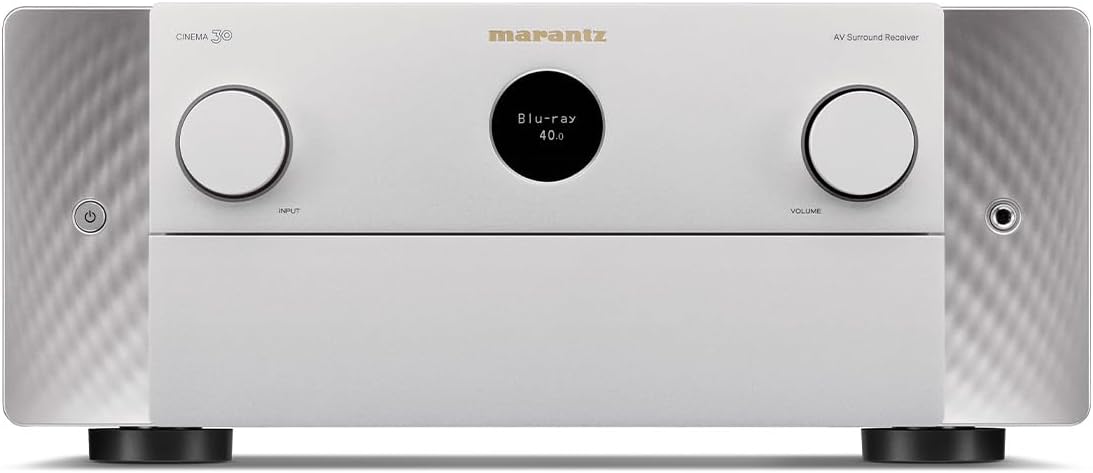
After hands-on inspection, the build quality is immediately apparent and exceptional. The chassis is constructed from thick, rigid steel with a brushed aluminum front panel that is cool to the touch and impeccably finished. The signature porthole display, a Marantz hallmark, is made of glass and offers perfect clarity. The large, damped volume knob rotates with a satisfying, silky smoothness that speaks of precision engineering. Every button and input selector has a definitive, high-quality tactile click. This is not assembled from thin, resonant sheet metal; it feels like a single, solid block of engineered audio. For a collector, this “out-of-the-box” condition is what you’d grade as mint—flawless fit, finish, and structural integrity.
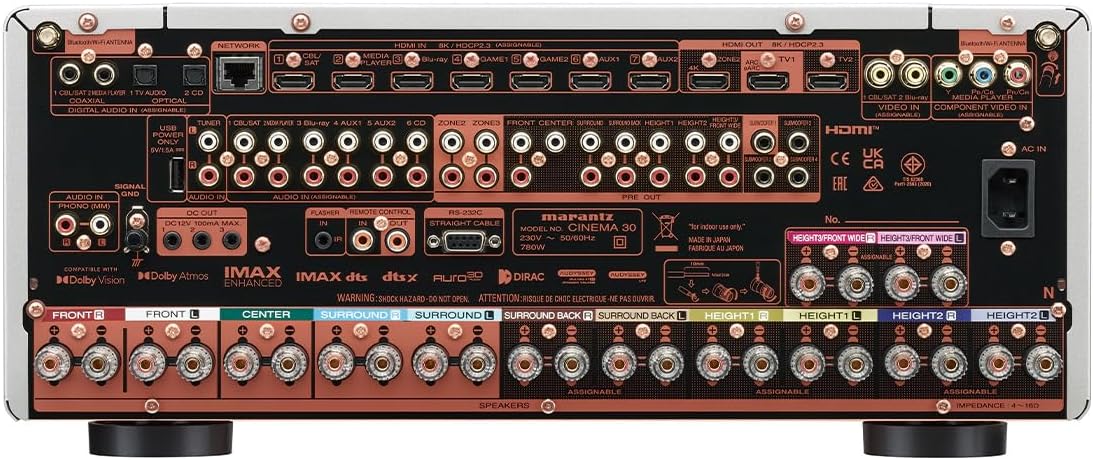
While we didn’t crack open our review unit (to preserve its condition), Marantz’s specifications and teardowns from trusted sources reveal the “chase cards” inside: the massive custom toroidal transformer, the discrete HDAM SA2 modules replacing standard op-amps, and the high-grade audiophile capacitors. These are the equivalent of high-gradable, rare inserts in the collectibles world. The internal layout is clean, with separated circuit boards to minimize interference, a sign of thoughtful, performance-first design. This attention to internal build quality directly impacts longevity and stable performance, key factors for a collector’s item meant to be used and appreciated for years.
Given its value and finish, protecting the Cinema 30 is paramount. It should be placed in a well-ventilated, dedicated audio rack with ample space above to prevent heat buildup. Avoid stacking other components directly on top. For dust protection when not in use, a custom-fitted cloth cover is recommended over plastic, which can trap moisture. During relocation, always use the original box and foam inserts—this cannot be overstated for preserving resale value. For more general tips on preserving high-value electronics, our guide to collector electronics care is an essential resource.
When conducting a Marantz Cinema 30 vs alternatives analysis, two primary competitors emerge: the Denon AVR-A1H and the Anthem AVM 90 processor/amplifier combo.
| Feature | Marantz Cinema 30 | Denon AVR-A1H | Anthem AVM 90 + Amp |
|---|---|---|---|
| Sound Signature | Warm, musical, “Marantz House Sound” | Dynamic, precise, reference | Neutral, highly accurate (ARC Genesis) |
| Build & Aesthetics | Timeless Silver/Gold, porthole display, premium feel | Modern black/silver, large display | Utilitarian pro-style, separates flexibility |
| Key Technology | Proprietary HDAM SA2 modules | Advanced AL32 Processing | Legendary ARC Genesis room correction |
| Collector/Resale Appeal | Very High (Iconic brand, distinctive look) | High (Flagship model) | High (Processor niche, superb room correction) |
| Approx. Total Investment | $4,800 | $4,500 | $8,000+ (with comparable amp) |
Choose the Marantz Cinema 30 if you prioritize a musically engaging sound signature for both movies and music, value iconic aesthetics and impeccable build quality in a single chassis, and want the simplicity and integration of a flagship all-in-one receiver. It’s the choice for the collector who sees their receiver as a work of art as much as a tool.
Consider the Denon A1H if you want the absolute latest in gaming features (specific HDMI chipset advantages) and a slightly more analytical sound for pure home theater dominance. Look to the Anthem route if your budget is higher, you demand the best-in-class room correction above all else, and you prefer the flexibility of separates. For a detailed breakdown of the Denon rivalry, see our comparison of Marantz vs Denon flagships.
Always purchase from an authorized dealer like this trusted retailer. Check for the official Marantz serial number sticker on the box and unit. The build quality should be flawless—any flex, sharp edges, or misaligned panels are immediate red flags for counterfeit or damaged goods.
Do not skimp on power conditioning. Use a high-quality power conditioner or at minimum, a dedicated AC outlet. Ensure at least 4-6 inches of clear space above the receiver for heat dissipation. Running the initial Dirac Live calibration is non-negotiable to unlock its full potential tailored to your room.
Pair the Cinema 30 with speakers that match its refined character. Consider brands like Bowers & Wilkins, Focal, or KEF for a synergistic match. For the best streaming quality, use a wired Ethernet connection over Wi-Fi. A good universal remote control system can streamline operation.
Keep everything. The original box, all packaging foam, the cloth bag, every manual, accessory, and even the plastic port covers. Document your purchase with a receipt from an authorized dealer. A complete “as new” package significantly boosts resale value on forums like Audiogon or USAudioMart.
Authorized dealers occasionally offer sales around major holidays. However, for a flagship model like this, significant discounts are rare. The best “value” is often found in bundled deals with speakers or other components from the same dealer.
The current price for the Marantz Cinema 30 is firmly set at $4,800 USD. This positions it at the apex of the all-in-one receiver market. When analyzing if the Marantz Cinema 30 is worth buying at this price, consider that you are paying for Japanese craftsmanship, proprietary discrete circuitry, and a build quality that transcends typical consumer electronics. It’s analogous to buying a master-grade collectible versus a common release. Available deals are uncommon on the unit alone, but bundled packages with high-end speaker brands can offer overall system savings. To guarantee you receive a genuine, factory-fresh unit with full warranty, always purchase from authorized channels.
Authorized dealers, including major online retailers and specialty audio shops, are the only recommended sources. They provide a valid Marantz USA warranty, typically covering parts and labor for 3 years. Before buying, confirm the return policy—a 30-day satisfaction guarantee is ideal, allowing you to audition the receiver in your own system. Reputable sellers will also offer knowledgeable support for setup questions.
Our exhaustive Marantz Cinema 30 honest analysis reveals a product that lives up to its flagship billing. It delivers a uniquely musical and powerful sound, wrapped in arguably the most beautiful and well-built chassis in the category. Its connectivity is future-proof, and its feature set, including Dirac Live, is complete. For the collector, its appeal extends beyond specs to tangible qualities of heritage, craftsmanship, and long-term ownership satisfaction. The Marantz Cinema 30 pros cons balance heavily toward the pros if your priorities align with its strengths.
So, what’s the final answer to should I buy Marantz Cinema 30? If you are a serious collector or enthusiast for whom audio is a passion and your home theater is a legacy system, the answer is a resounding yes. It is a justifiable investment that delivers on every promise. On a scale of 1-5 for the discerning collector, it earns a solid 4.8 out of 5. The minor deductions are solely for its premium price and size, which are inherent to its class.
The Marantz Cinema 30 is a masterpiece of integrated receiver design and a worthy centerpiece for any collector’s high-end system, representing the pinnacle of what’s possible in a single chassis. If your quest is for the best home theater receiver to collect today, this should be at the very top of your list.
For its target audience—the serious collector and audiophile—yes, absolutely. The $4,800 price buys you exceptional build quality, proprietary high-performance circuitry (HDAM SA2), a timeless aesthetic, and a sound signature that is both reference-grade for movies and musically lush for stereo. It’s an investment in a long-term centerpiece, not a disposable piece of tech. If you value these attributes, it justifies its cost.
The Denon A1H is its closest sibling and competitor. The primary differences are sonic character and focus. The Marantz has a warmer, more “musical” sound favored by many for two-channel listening, while the Denon is slightly more dynamic and precise, with a minor edge in cutting-edge gaming features. Build quality is similarly excellent on both. The choice often comes down to personal sound preference and brand affinity.
No, it is not ideal for beginners. The high price, complexity of advanced features like Dirac Live, and the need for a complementary high-end speaker system make it overwhelming and financially impractical for someone new to the hobby. Beginners should start with a mid-range receiver to learn their preferences first.
Beyond the unit itself, prioritize a sturdy, well-ventilated audio rack. A high-quality power conditioner is highly recommended for clean power and surge protection. For dust, a custom-fit fabric cover is best. Most importantly, never discard the original box and packaging foam for safe transport or future resale.
Purchase only from authorized Marantz dealers. Authentic units will have a pristine, heavy build with perfect finish alignment. The packaging will be high-quality and include all accessories listed in the manual. The serial number on the box should match the one on the rear panel of the receiver, and you can verify this serial number with Marantz customer support for warranty activation.
We recommend purchasing from this trusted retailer for competitive pricing and guaranteed authentic products. While the MSRP is fixed, authorized dealers sometimes offer bundle discounts with speakers or other components, providing the best overall value.
As a high-end audio component, its “resale value” is for the unit as a whole. Well-cared-for Marantz flagships historically retain value very well. Expect to recoup 50-70% of the original price after 3-5 years if the unit is in mint condition with all original packaging and accessories, especially if it’s a distinctive finish like Silver/Gold. This strong value retention is a key part of its collector appeal.
Yes, in most realistic home theater configurations. Its 140 watts per channel (11 channels driven) is a conservative, high-current rating. The massive power supply provides ample headroom for dynamic peaks, even with demanding speakers. For extremely large rooms or inefficient speakers, it can also be configured to use external amplifiers for the main channels, acting as a preamp/processor, showcasing its long-term flexibility.
Stay Ahead of the Collector Community!
Get the latest pack reviews, pull rate data, market value updates, and exclusive collector deals delivered straight to your inbox. Join thousands of collectors who trust smmpacks.com!
Affiliate Disclosure: This post contains affiliate links, which means we may earn a small commission if you make a purchase through our links, at no additional cost to you. This helps support smmpacks.com and allows us to continue delivering in-depth collectibles content for our community. We only recommend products we have personally handled, tested, or thoroughly researched. Thank you for your support!